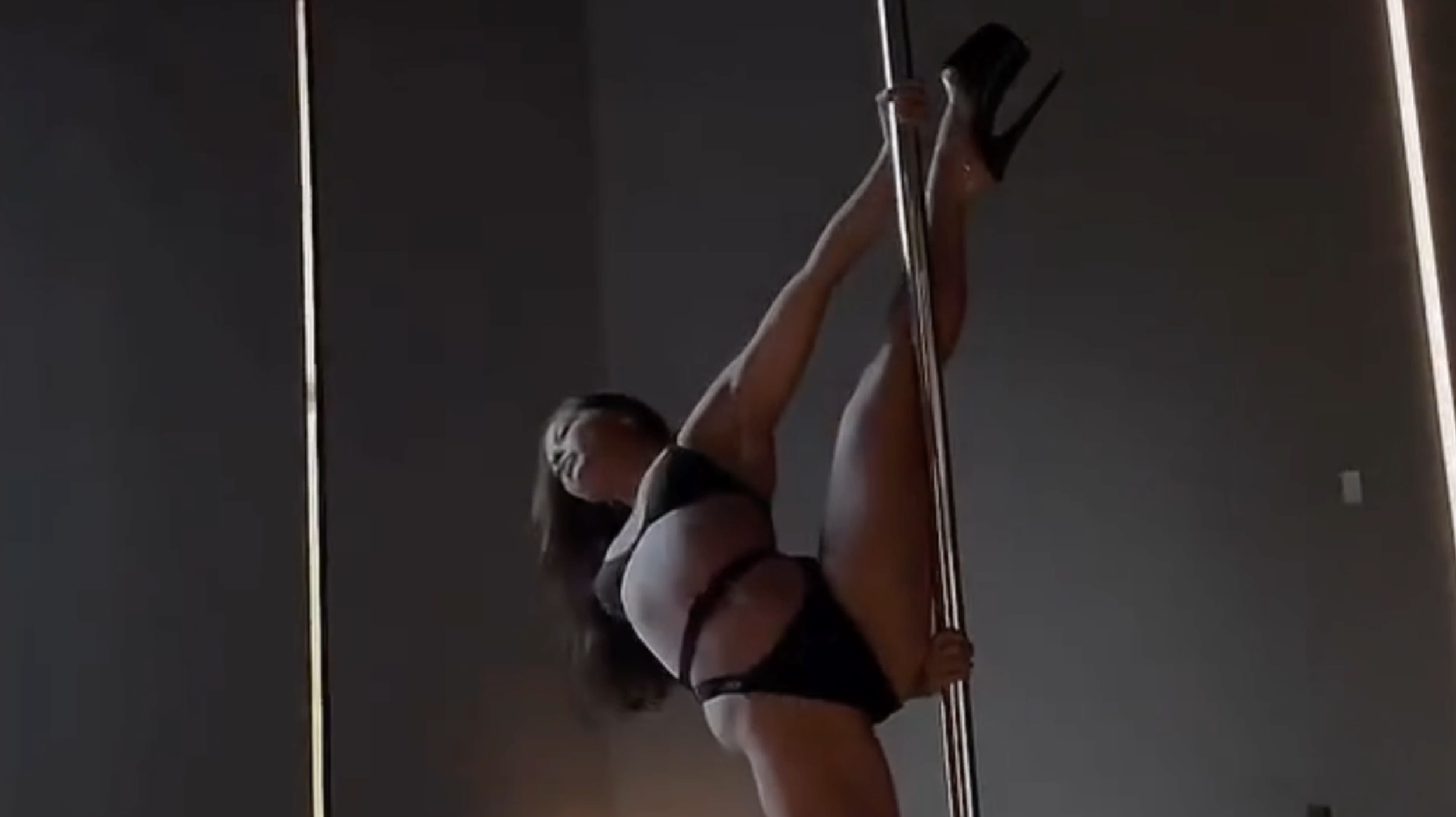
What to Look for in a Private Pole Coach (And the Red Flags Most Women Miss)
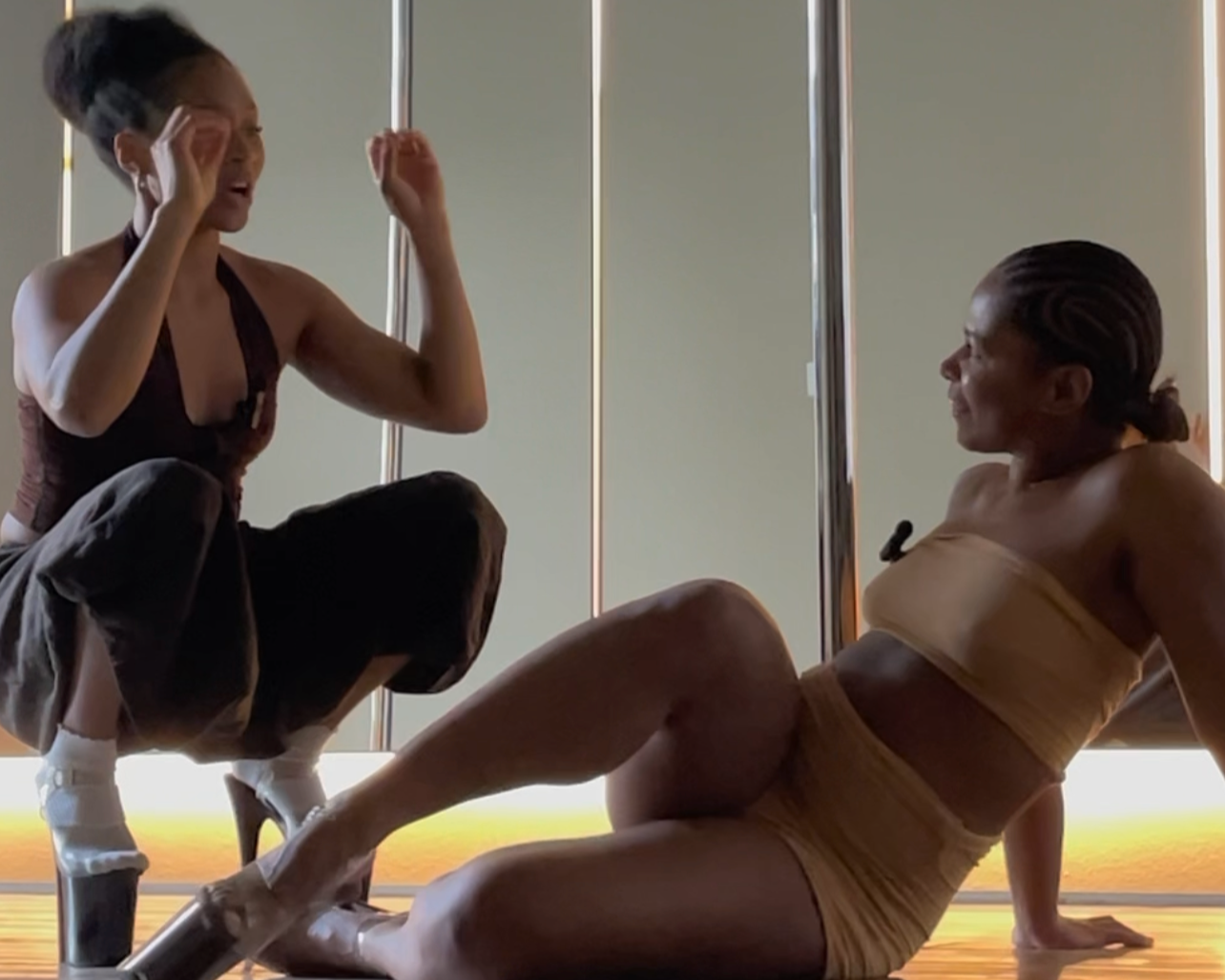
If you've been thinking about investing in a private pole coach, you're already asking the right question. Private coaching is one of the fastest ways to develop real skill in pole — not because it's exclusive or expensive, but because of what it structurally allows that a group class simply cannot: undivided attention, a plan built around your specific body and goals, and feedback that lands in real time rather than getting lost in a room full of other people.But here's what most women get wrong when they start looking for a coach. And getting it wrong is expensive — not just financially, but in terms of time, momentum, and the relationship you're trying to build with your own body.The Mistake Most Women Make When Choosing a Pole Coach
They choose a performer instead of a teacher. Let me explain.It makes complete sense. You find someone on Instagram whose movement stops you mid-scroll. She's magnetic. Her lines are extraordinary. Her aesthetic is everything you want to embody. And you think — if I train with her, I can become that.The problem is that being an exceptional pole dancer has almost nothing to do with being an exceptional pole teacher. The ability to execute a skill at a high level does not automatically transfer into the ability to look at someone else's body, identify what they're doing wrong, understand why, and communicate a correction that actually lands.Teaching is its own discipline. It requires the ability to observe with nuance, to break complex movement patterns into digestible progressions, to meet a student where she actually is rather than where the coach wishes she were, and to build a program that develops her systematically over time rather than just responding to whatever she wants to try that day.A coach who only fulfills your trick requests is not coaching you. They're taking your money to supervise your practice. That's not the same thing — and over time, the difference shows in your body.What a Real Private Pole Coaching Relationship Looks Like
Private coaching done well looks like this: your coach knows your goals, your body's tendencies, your strengths, your gaps, and the specific physical and psychological patterns that are getting in your way. Each session builds on the last. The program shifts as you develop. And when you hit a plateau — which every mover does — your coach has enough context to understand why and adjust accordingly.Research on individual coaching versus group training consistently shows that one-on-one coaching produces faster skill acquisition, more targeted feedback, and better goal attainment than group instruction — not because the coach is more talented, but because the structure allows for personalization that group settings structurally cannot provide.In a group class, the instructor is managing a room. In a private session, the instructor is managing you. That shift in focus changes everything.Red Flags to Watch for When Evaluating a Private Pole Coach
They don't ask about your goals before your first session
A coach who starts training you without understanding what you're working toward is building a program around her preferences, not yours. Before money changes hands, a serious coach should ask: what do you want to accomplish, what's your experience level, do you have any injuries or physical limitations, and what does progress look like to you?Every session is reactive rather than progressive
If your coach is simply responding to "I want to learn this trick today" without any underlying structure, you're not being coached — you're being facilitated. Progressive coaching means each session is connected to a larger plan. Strength work is building toward a specific goal. Technique corrections are being reinforced over time. There is a thread running through the work.They don't address your technique, only your output
A coach who watches you attempt something and only tells you whether it worked or didn't — without breaking down the mechanics of why — is not giving you the tools to improve independently. You should leave every session understanding your body better than when you arrived.they train everyone the same way
If your private sessions feel identical to what you'd get in a group class — just with fewer people — that's a sign the coaching isn't actually personalized. Your body is not the same as anyone else's. Your program shouldn't be either.The focus is exclusively on tricks
Tricks are the visible output of pole training. But the foundation under them — strength, mobility, flexibility, body awareness, nervous system regulation — is what makes those tricks possible, safe, and sustainable. A coach who skips the foundation to get to the flashy stuff faster is setting you up for a ceiling you'll hit sooner than you should.Do You Need to Be at a Certain Level to Work with a Private Coach?
No. And this is one of the most common misconceptions that keeps women in group classes longer than serves them.Private coaching is actually most valuable at the beginning of a practice, not at the advanced stages. The movement habits you build in your first six to twelve months of pole are the ones your body will default to for years. A coach who catches a technical error early — in your grip, your shoulder engagement, your weight distribution — saves you from months of reinforcing a pattern that will eventually plateau you or injure you.That said, private coaching is valuable at every stage. For intermediate practitioners, it accelerates the development of artistry and flow. For advanced movers, it addresses the specific technical gaps that group classes never had time to reach. The question isn't whether you're ready for a coach. The question is whether you're ready to invest in your own development in a focused, intentional way.If the answer is yes, you are ready.What Makes the Ascent Residency Different
At PoleBait Haus, private coaching through the Ascent Residency is built around a philosophy that most private pole lessons don't operate from: the goal is not to help you learn tricks. The goal is to help you build a body and a movement practice that makes everything you want to do possible — safely, sustainably, and on your own terms.Every Ascent Residency client begins with a goals conversation. What do you want to accomplish? What does your body feel like right now? What has gotten in the way before? From there, we build a program with a 360-degree approach — strength, mobility, flexibility, and pole technique are developed together rather than in isolation, because seamless, effortless movement is the product of all of them working in concert.Each month shifts in focus. If you're working toward a specific trick, we train progressively toward it — including the off-pole conditioning that makes the trick physically available to you before we ever attempt it on the pole. If you're working on low flow choreography, we learn movement but we also address the technique underneath it — the specific physical choices that make movement look magnetic rather than mechanical.This is not a drop-in. It's not a series of disconnected sessions. It's a coaching relationship — one with continuity, accountability, and a plan that evolves as you do.The Ascent Residency is available by application only, with a six-month minimum commitment. It is our most intimate offering and our most transformative one.Apply for the Ascent Residency →
A Note on Group Classes vs. Private Coaching
Choosing private coaching doesn't mean leaving group classes behind. Many of the women who work with me privately also attend group sessions at other studios — and their private coaching makes their group class experience significantly richer, because they arrive with a framework for understanding what they're doing rather than just doing it.Think of group classes as the environment where you practice and explore. Think of private coaching as the relationship where you develop. Both have value. They just serve different functions — and understanding the difference helps you invest your time and money in the combination that actually moves you forward.PoleBait Haus is a private pole and wellness studio in Los Angeles offering somatic pole training through the Fluid Body Method. The Ascent Residency is our private 1:1 coaching program — available by application only for women ready to build a pole practice with real depth, real structure, and real results.