PoleBait vs. Traditional Pole Studios: Why We're Not the Same Thing
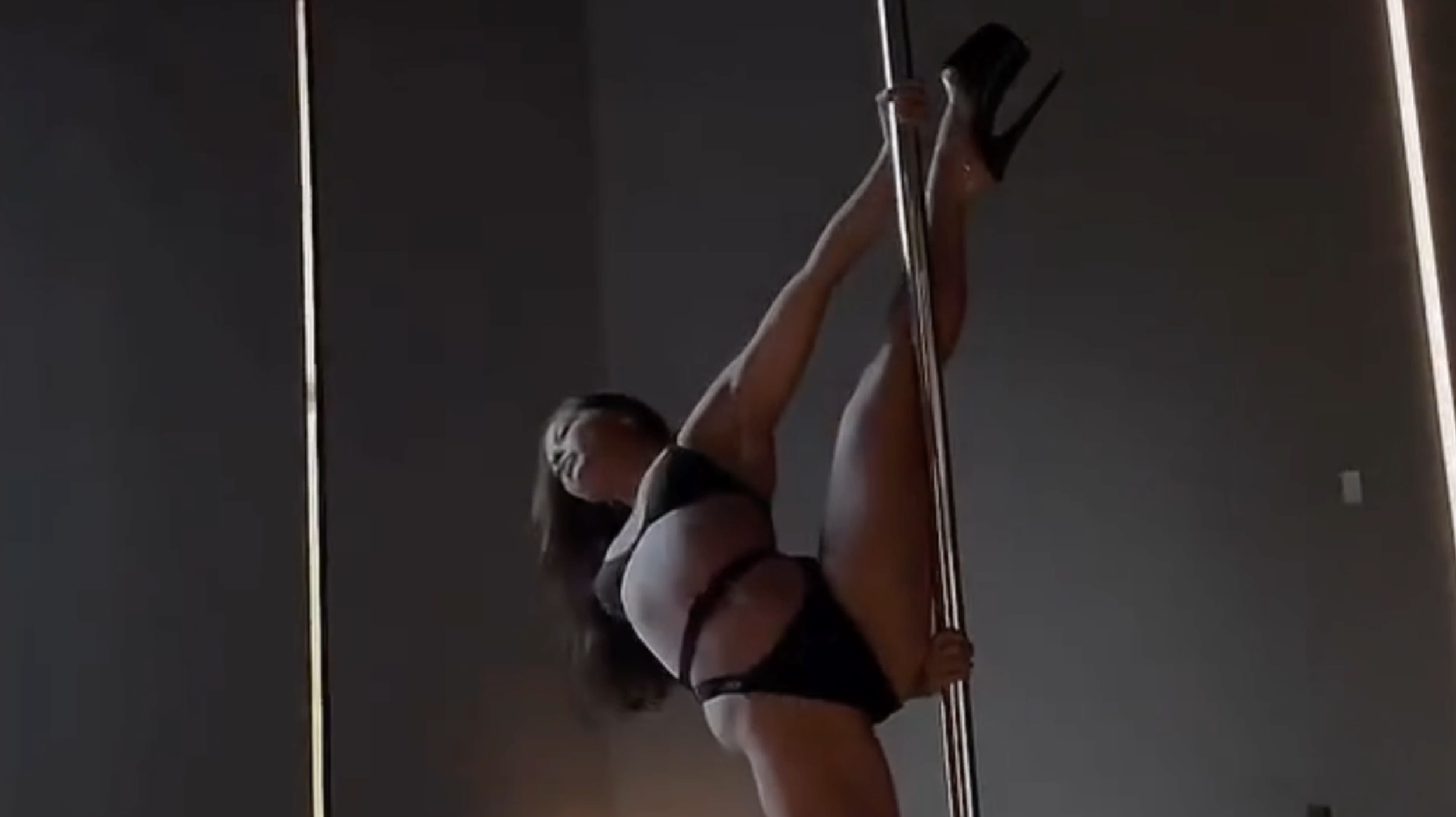
Most pole studios are built for fast consumption.You drop in. You learn a trick. You post it. You come back next week and do it again. The class moves at a pace set for the group, the instructor cycles through the room, and if you're lucky you get thirty seconds of individual attention before the next combination is called. You leave having done something. But the question of whether you actually grew — whether something shifted in your body, your understanding, or your relationship to the practice — that question mostly goes unanswered.PoleBait Haus was built as a direct response to that model.We are not a drop-in studio. We are not fast consumption. We are slow, intentional, and deeply invested in what happens to a woman inside the practice — not just what she can eventually perform outside of it.The Problem with How Most Pole Is Taught
Traditional pole studios operate on a class model that works well for volume but poorly for depth. Large groups, rotating instructors, curriculum designed to move everyone through the same material at the same pace regardless of where they actually are.There is nothing wrong with that model for what it is. But what it produces is a very specific kind of pole practitioner — someone who has collected tricks without necessarily understanding what's underneath them. Someone who can execute something on a good day but can't consistently replicate it because the foundation was never really built. Someone who has been training for a year and still feels like she's behind.The other thing that model produces — and this is the one most studios won't talk about — is a disconnection between the movement and the mover. You learn to execute. You learn to perform. But the question of how it feels, what it means, what it's unlocking in your body and your sense of yourself — that question doesn't fit into a 60-minute group class with ten other people.That gap is where PoleBait lives.What We Do Differently
We have a methodology.
The Fluid Body Method is not a vibe or an aesthetic. It is a specific approach to pole training that integrates pole technique, somatic movement, strength and conditioning, mobility and flexibility, and embodied artistry into a complete practice. Every offering at PoleBait — from Flow Foundations to the Fluid Body Series to the Ascent Residency private coaching program — is built on the same foundation.This matters because most pole studios don't have a methodology. They have a style, a culture, maybe a signature class format. But a methodology means there is a coherent philosophy behind every decision — what gets taught, in what order, at what pace, and toward what end. It means that when you train at PoleBait, you are not just accumulating experiences. You are building something.We pay attention to the details.
In a room of ten women, an instructor cannot catch the subtle weight shift that's making your spin collapse. She cannot notice that the way you initiate movement from your shoulder instead of your lat is the reason your strength isn't translating. She cannot see the moment where your breath stops and your body armors up before a move that scares you.At PoleBait, we can. Because our sessions are capped at four to six women maximum, and because our instructors are trained to notice. A single cue — one observation, delivered at the right moment — can unlock something that months of repetition couldn't. That is what detail-level attention produces. Not just correction, but revelation.We train the whole practice.
You will learn tricks at PoleBait. You will learn combinations, inversions, low flow choreography, spin pole, floorwork, transitions. You will get stronger, more flexible, more mobile. You will learn to hold your bodyweight in positions that feel impossible when you arrive.But you will also learn to feel what you're doing. To breathe into it. To move with musicality and intention rather than just executing a shape. To find your own expression inside a movement rather than copying someone else's. To confront the places where fear and tension and self-consciousness live in your body — and to move through them rather than around them.That is what makes this a wellness practice rather than just a pole class. And that is why the women who train at PoleBait don't just get better at pole. They get better at being in their bodies.The space itself is intentional.
PoleBait Haus is a private loft in Downtown Los Angeles designed to feel like a home where you can flow. The lighting is low and warm. The energy is intimate. There is nothing clinical or gymnasium-adjacent about it. We put significant thought and care into the curation of the space because we believe the environment shapes the experience — and a woman who feels comfortable, held, and beautiful in her environment moves differently than one who feels observed or judged.This is why it's called a Haus and not a studio. A studio is where you go to work. A haus is where you go to live.What Women Say When They Arrive
The women who find PoleBait tend to arrive from one of two places.Some have never tried pole and are drawn to what they see in our content — not the tricks, but the quality of presence the women have. One woman who reached out recently said it plainly: the women who train with us look sure of themselves. They look free. She wanted that feeling, and she recognized that it wasn't something she'd seen in other pole content.Others have been training for a year, two years, sometimes more. They've been in studios. They've learned moves. And somewhere along the way they realized that something was missing — that the practice felt more like a checklist than a transformation. They could do the Ayesha but they didn't know why it mattered. They could hit the shape but they didn't feel it.What both groups find at PoleBait is the same thing: a practice that treats their development as worthy of real attention. Not fast consumption. Not efficient throughput. But slow, deliberate, invested coaching that builds something that lasts.We Still Teach the Fundamentals
To be clear, this is not a studio where you sit in a circle and breathe and call it pole dancing.We teach grip. We teach engagement. We teach spins, inversions, combinations, transitions, choreography, strength, flexibility, and everything in between. You will sweat. You will work. You will be challenged physically in ways that surprise you.The difference is that we teach all of that within a framework that asks: why does this matter for you specifically? What is your body doing, and why? What does this feel like, and what does that tell you?That framework is what makes the results stick. Not just in your pole practice, but in how you carry yourself when you leave.The Question Worth Asking
Before you book a pole class anywhere, ask this: does this studio have a methodology, or does it have a vibe?Does the instructor know your goals, or are you anonymous in a group?Will you leave feeling like you checked a box, or like something actually shifted?At PoleBait, the answer to all three is the same. We know your goals. We have a methodology. And the women who train here leave feeling fuller, more accomplished, more connected — not to a trick, but to themselves.That is the difference.New to pole? Flow Foundations is your entry point — a small group beginner session built around the Fluid Body Method. In-person in Downtown LA and online. From $35.
Ready for an ongoing practice? The Fluid Body Series is our progressive small group training program. From $275/month.
Ready to go all the way in? The Ascent Residency is our private 1:1 coaching program. By application only.
PoleBait Haus is a private pole and wellness studio in Downtown Los Angeles offering somatic pole training through the Fluid Body Method — a mind-body movement practice for women who want strength, artistry, and a relationship with their bodies that lasts.