The One Workout Women Will Regret Not Starting Sooner (It's Not Pilates)
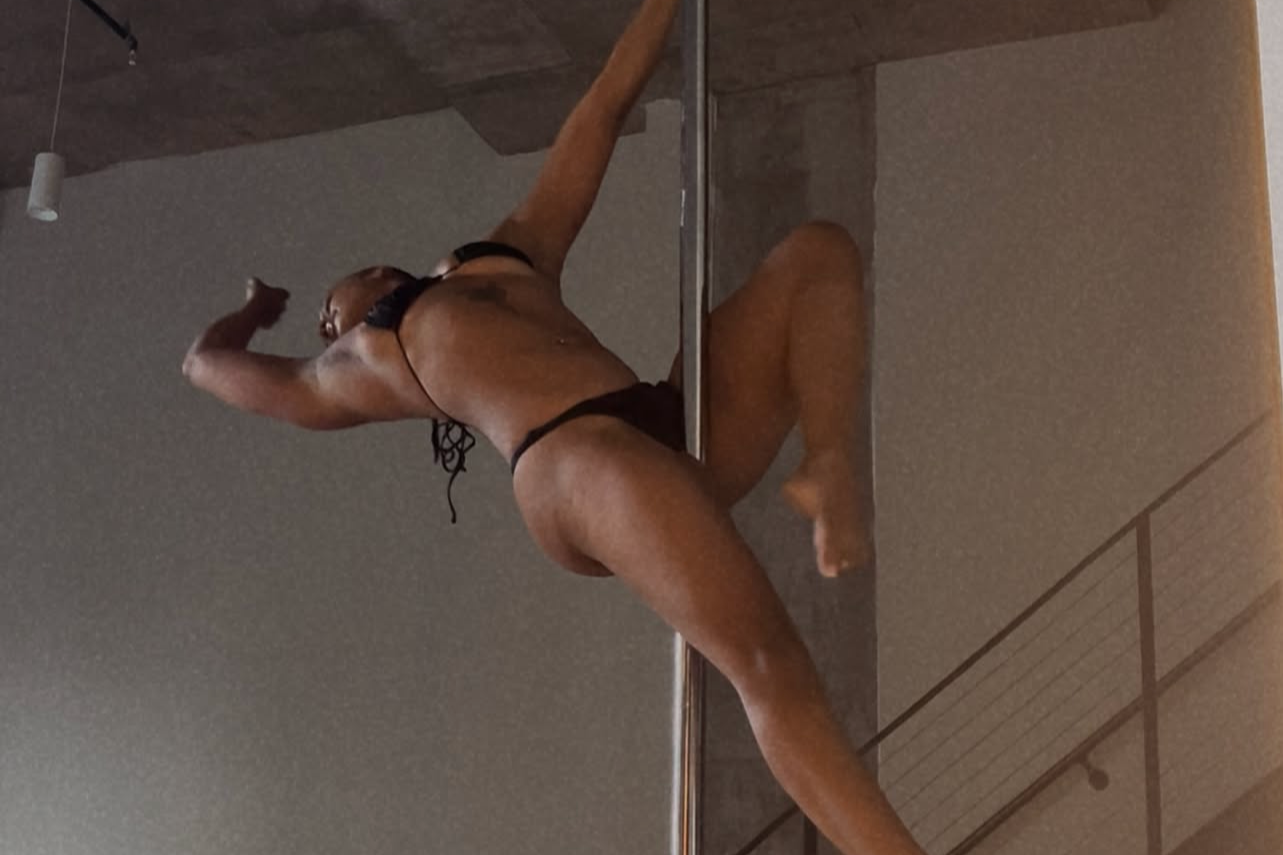
If you're in your 20s or 30s and you've already figured out your workout routine — maybe it's Pilates, maybe it's strength training, maybe it's a combination of both — this post is still for you.Because there is one practice that most women in this age group have never seriously considered, that checks every box that matters for how your body feels now and how it ages over the next several decades. It builds real upper body strength. It develops grip strength — which researchers now consider one of the most reliable biomarkers of biological aging and a predictor of long-term mortality. It improves postural stability, flexibility, and coordination simultaneously. It regulates the nervous system. And perhaps most importantly, it never gets boring.It's pole. And no, it's not what you think it is.Why Your 20s and 30s Are the Most Important Decade for Your Body
The strength and movement habits you build in your 20s and 30s are the ones your body defaults to for the rest of your life. This is not an exaggeration. It's physiology.Peak muscle mass for most women occurs somewhere between the mid-20s and early 30s. After that, without consistent resistance training, the body begins a slow but measurable process of muscle loss called sarcopenia. Research published in a 2024 American Heart Association Scientific Statement found that each 5 kilogram increase in grip strength was associated with an 8% lower all-cause mortality risk. Muscular strength built in midlife doesn't just make you feel better now, it is one of the most significant predictors of how well you age.The women who build a serious strength practice in their 20s and 30s are not just investing in how they look. They are investing in how long and how well they live.The question is not whether to build strength. The question is which practice will actually keep you showing up for years, not just months.The Problem with Most Workouts Women Try
Pilates refines. Yoga lengthens. Running conditions. Barre tones. All of these are valuable and none of them are complete on their own. But more importantly, almost all of them hit a ceiling — a point where the practice stops surprising you, stops challenging you in new ways, and starts to feel like maintenance rather than growth.
That ceiling is where most women quietly stop showing up. Not dramatically, not with a formal decision. They just gradually go less, prioritize other things, and eventually the practice fades.Pole does not have a ceiling.What the Research Actually Shows
A landmark 2024 longitudinal study tracking 54 women with no prior pole experience through a 20-week training program found significant improvements across every major physical health marker measured: reduction in fat percentage, increases in muscle mass and fat-free mass, and measurable increases in hand grip strength. These were not recreational exercisers who were already fit. They were beginners.A separate peer-reviewed feasibility study following 68 women aged 19 to 60 through eight weeks of pole dancing classes found an 89.5% retention rate — meaning nearly nine out of ten women who started stayed through the full program. For context, the average gym membership retention rate at the six-month mark is significantly lower. Women stay in pole not because they're being disciplined. They stay because they genuinely want to come back.Research also confirms that competitive female pole dancers have significantly greater grip strength, upper body muscle mass, and flexibility than untrained women and lower body fat. This is not the result of a genetics lottery. It is the result of what pole specifically demands from the body over time.Why Pole Builds What Other Workouts Miss
Pole is classified as an aerial discipline sharing characteristics with gymnastics and dance. What that means physiologically is that it demands something most workouts don't: full-body loading against gravity in three-dimensional space.When you grip a vertical pole and begin to move your bodyweight around it, above it, and against it, every major muscle group has to coordinate simultaneously. Your lats, rhomboids, biceps, and rear deltoids — the muscles that Pilates touches lightly — become primary movers. Your core doesn't just stabilize. It compresses, extends, and rotates under real load. Your grip, which research increasingly links to longevity and biological aging, is trained in every single session just by holding on.And then there is the neurological dimension. Pole requires you to move in all planes simultaneously, often upside down, which forces your brain to build and continuously rewire neural connections. Studies show that complex motor-pattern activities like dance protect the brain from aging better than monotonous cardio. Pole takes this further — the spatial demands, the three-dimensional navigation, the constant novelty of new shapes and positions keeps the brain actively engaged in ways that a treadmill or a reformer simply cannot replicate.The Part Nobody Talks About: Joy as a Retention Strategy
The fitness industry has spent decades telling women that the path to a better body runs through discipline, consistency, and willpower. Show up even when you don't want to. Push through. Earn it.
What the research actually shows is that intrinsic motivation (aka showing up because you genuinely want to, because the practice gives you something that feels good) is the most reliable predictor of long-term exercise adherence. Not discipline. Not guilt. Joy.Pole is one of the only fitness practices that delivers joy as a built-in feature of the training itself.Every session brings something new — a shape you've never tried, a transition that suddenly clicks, a moment where your body does something it couldn't do last week. The rediscovery never stops. There is always a next challenge, a next skill, a next layer of artistry to develop. Women who have been training for five years are still being surprised by what their bodies are capable of. That is not something you can say about most workouts.Beyond the novelty, there is something about moving beautifully, about feeling strong and fluid and expressive at the same time, that produces a quality of satisfaction that a weight lifted or a mile run simply doesn't. It is felt, not just measured. And it keeps women coming back.What Starting in Your 20s or 30s Actually Gives You
Starting pole in your 20s or 30s gives you something that starting later cannot fully replicate: time for the practice to compound.The strength you build now will be the foundation for everything you attempt later. The movement patterns you develop now will become second nature. The relationship with your body that pole builds — the awareness, the trust, the capacity to feel what you're doing rather than just doing it — deepens over years in a way that accelerates everything else.The women who started pole in their 20s and trained through their 30s are the ones who look extraordinary in their 40s and 50s. And it's not because of genetics. It's because of what a decade of intentional, full-body, joyful movement does to a body over time.You don't have to compete. You don't have to perform. You don't even have to be strong yet. You just have to start.Where to Begin
If you're in Los Angeles and you're ready to start, Flow Foundations at PoleBait Haus is your entry point. It's a 60-minute small group beginner session — never more than five women — built around grip, breath, engagement, and the foundational movement pathways of the Fluid Body Method. No prior experience required. In-person in Downtown LA from $45, online from $35.If you're ready for an ongoing practice that progressively builds strength, artistry, and body awareness over time, The Fluid Body Series is where that work happens.The window to build the body you'll live in for the next fifty years is open right now. The only thing you'll regret is waiting.PoleBait Haus is a private pole and wellness studio in Downtown Los Angeles offering somatic pole training through the Fluid Body Method — a mind-body movement practice for women who want strength, joy, and a relationship with their bodies that lasts.