The Workout for Women in Their 30s That Nobody Talks About
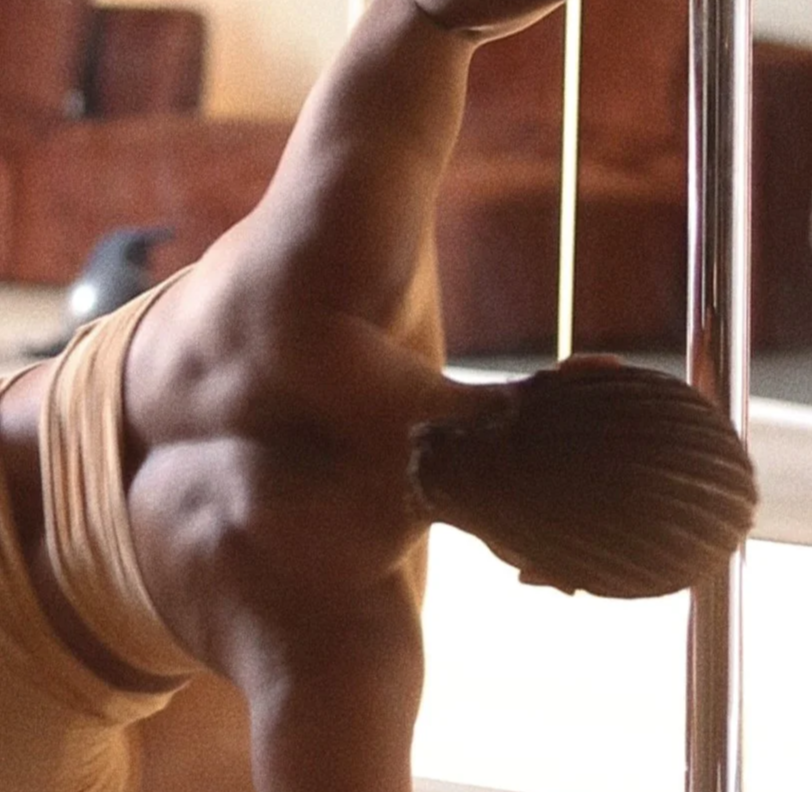
Ask a woman in her 20s or 30s what the best workout is and you will probably hear one of a few answers: Pilates, strength training, yoga, running, or barre.All legitimate. All valuable. And all missing something that one specific practice delivers better than almost anything else.Pole dancing, when practiced with intention and a real methodology behind it, is one of the most complete workouts available to women right now. The research supports it. The results are visible. And still, it remains one of the most underestimated disciplines in the wellness space.Here are seven reasons why women in their 20s and 30s who have not started yet may wish they had.
1. It Builds the Upper Body Strength That Most Women Never Develop
Upper body strength is one of the most underdeveloped areas in many women’s fitness routines. Pilates touches it. Yoga engages it. But neither practice asks your upper body to do what pole does: move your full bodyweight through space, repeatedly, against gravity, for an extended period of time.Research published in peer reviewed sports science journals confirms that competitive female pole dancers have significantly greater upper body muscle mass than untrained women. Not from lifting in a gym, but from the repeated demand of gripping, pulling, stabilizing, and maneuvering their bodyweight on a vertical apparatus, session after session.A 2024 longitudinal study tracked 54 women through a 20 week pole training program and found significant increases in muscle mass and fat free mass in women who had never trained pole before.Twenty weeks.No prior pole experience required.2. It Develops Grip Strength, One of the Most Important Longevity Markers You've Never Trained.
Most women have never specifically trained their grip. Most women also do not know that grip strength is one of the most reliable biomarkers of biological aging recognized in gerontology research.

A 2024 American Heart Association Scientific Statement found that each 5 kilogram increase in grip strength was associated with an 8 percent reduction in all cause mortality risk. Grip strength is not only about what your hands can hold. It is a reflection of your overall muscular health, neurological function, and physical resilience as you age.

On the pole, you develop grip strength in every single session. Not through isolated exercises, but through the repeated functional demand of holding your own bodyweight.

Over time, that grip becomes strong, capable, and reliable. And that strength pays dividends in every other area of your life for decades.
3. It Trains Your Body in Three Dimensions
Most workouts happen in one or two planes of movement. You push, pull, hinge, and squat. You move forward and backward, up and down. Your body becomes strong in predictable patterns, and undertrained everywhere else.

Pole training is three dimensional by nature. You move around the pole, above it, below it, sideways, inverted, and on a diagonal. Your brain has to constantly recalibrate spatial awareness, coordinate opposing muscle groups, and solve new movement problems in real time.

Research on complex motor pattern activities suggests that this kind of multidirectional, cognitively demanding movement supports brain health in ways that monotonous cardio does not. It builds neuroplasticity, the brain’s capacity to form new connections, in a way that a treadmill or reformer simply cannot replicate.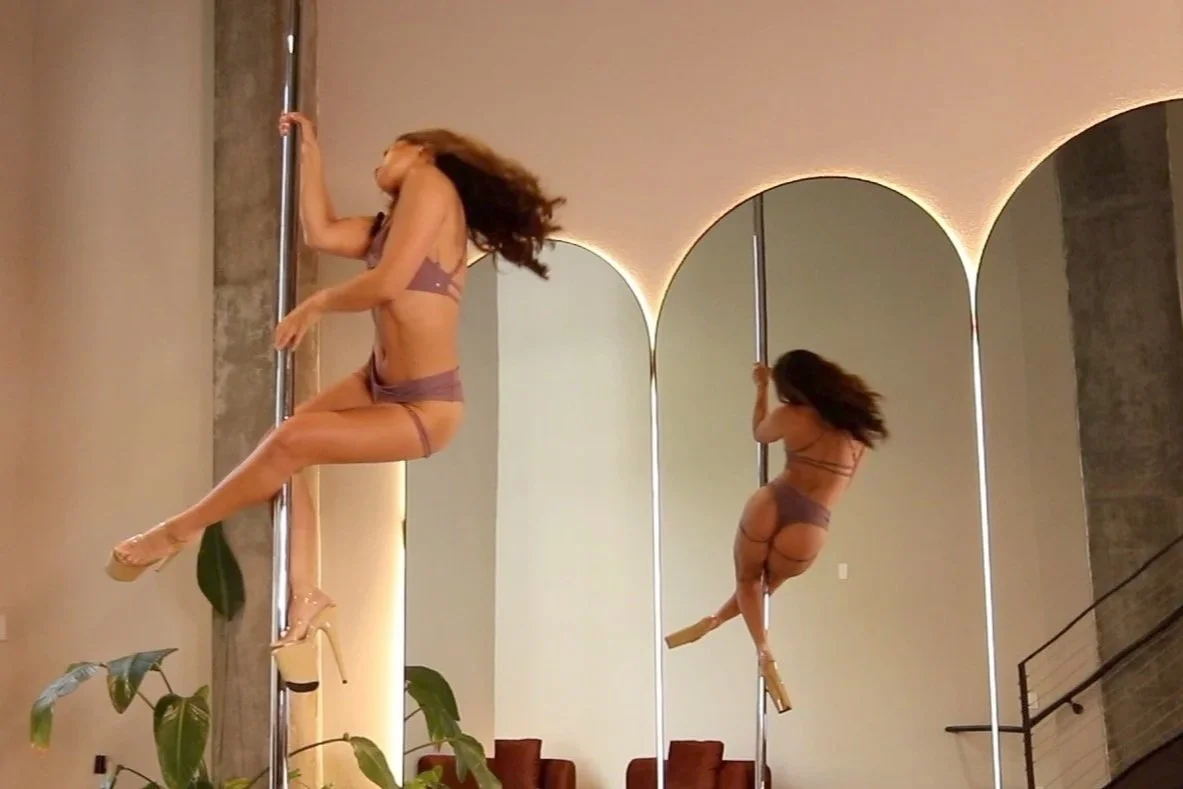
4. It Improves Flexibility, Mobility, and Postural Stability Simultaneously
Most flexibility work is passive. You hold a stretch and wait.Most strength work is rigid. You move through a fixed range of motion under load.Pole combines active flexibility and strength in the same practice, which creates a kind of mobile strength that yoga and weight training do not fully develop on their own.A peer reviewed study published in PubMed found that regular pole dance practice contributed to significant improvements in postural stability and grip strength, with those improvements increasing as training experience grew. The longer you train, the more stable and mobile your body becomes.For women in their 20s and 30s, building this foundation now means entering your 40s and 50s with a body that moves fluidly, not rigidly. A body that can recover better, sustain fewer injuries, and feel stronger in everyday life.Why pole counts as strength training for women over 30
When women in their 30s go looking for a strength program, they find the same thing every time. A barbell, a rack, a progression chart, and a gym they have to get themselves to three times a week. That works for some women. For plenty of others it never becomes a habit, and the plan quietly ends in month two.

Strength training for women over 30 matters for reasons that have very little to do with how you look. Muscle becomes harder to build and easier to lose as hormones shift through this decade. Grip strength, as covered above, tracks closely enough with mortality risk that the American Heart Association named it in a 2024 scientific statement.

Pole delivers progressive overload without a single plate. Your bodyweight is the load. The progression is built into the skills themselves: a hold demands more than a grip, a climb demands more than a hold, an invert demands more than a climb, and each one arrives when your body is ready to meet it. The 2024 longitudinal study of 54 women found significant increases in muscle mass and fat free mass across 20 weeks, in women who had never trained pole before.

What makes it functional rather than isolated is that nothing happens in a single joint. You pull, brace, rotate, and stabilize at the same time, which is much closer to how a body actually works than a machine that moves in one fixed direction.

For women in their 30s who have started and abandoned a gym routine more than once, that is usually the deciding difference. The strength arrives because the practice is one you want to come back to.
What changes for women in their late 30s and 40s
This post is framed around women in their 20s and 30s, but a significant share of the women who walk into a first session are 35 or older, and they arrive with a slightly different question.

Search for the best workout for 35 year old female bodies and you will mostly find the same lists written for 25 year olds with a warning about joints attached to the end. That is not useful. What actually changes in this stretch of life is specific. Bone density begins its slow decline. Muscle gets harder to hold onto. Recovery becomes less forgiving. And the hormonal shifts in the years approaching perimenopause change how the body responds to both load and stress.

The training answer to all of that is not less. It is load bearing work, resistance through the whole body, and something that settles the nervous system rather than taxing it further.

Pole does all three in the same session. Hanging, climbing, and holding your own weight is load bearing by definition, which is what bone tissue responds to. The strength demand is continuous rather than occasional, which is what preserves muscle. And because the practice asks for attention more than intensity, it tends to leave women in their 40s feeling restored rather than emptied out.

There is also the part that never makes it into a training plan. Women in their 40s are told constantly, in a hundred small ways, what their bodies are no longer for. Pole answers that in the body rather than in the head, and it answers it every single session.
5. It Keeps You Consistently Motivated Because It Never Gets Boring
This is the one nobody talks about, but almost everyone experiences: most workouts plateau. Not only physically, but experientially.

You reach a point where you know the routine. You know what to expect. The novelty that made you want to show up in the beginning is gone.

That plateau is where many fitness practices quietly end.

Pole does not plateau in the same way. There is always another shape to explore, another skill to build, another layer of artistry, strength, and expression to develop. Women who have trained for five years are still surprised by what their bodies can do.

The practice evolves with you, and that constant rediscovery is what keeps women showing up week after week, year after year.

A feasibility study that followed 68 women through eight weeks of pole classes found an 89.5 percent retention rate. Nearly nine out of ten women who started completed the full program. Compared to the way many people fall off traditional fitness routines, that number matters.

Women do not stay in pole because they are forcing themselves to be disciplined. They stay because they genuinely want to come back.
6. It Builds confidence That Lives in Your Body, Not Just Your Head
Most fitness practices build confidence that lives in your head. You feel better about how you look, or you feel proud of a number you hit. That kind of confidence is real, but it is still tied to external metrics that fluctuate.

Pole builds something deeper.

Presence. Awareness. Command. A felt connection to your own body that does not depend on the mirror, the scale, or a before and after photo.

It lives in the body, in the felt sense of what you can do, what you can hold, and what you can express. It comes from learning to trust your own hands to carry your weight. From discovering that your body can do something genuinely difficult. From finding your own expression inside a movement and letting yourself own it.

Women who train in pole consistently describe a shift that extends far beyond the studio. They carry themselves differently. They feel more connected to their bodies. They move through the world with a kind of ease, command, and self possession that did not come from aesthetic confidence alone.

That is what a decade of intentional pole training builds in a woman.

And it starts in the very first session.
7. It Addresses the Inner Work (Not Just the Outer Results)
The wellness industry is shifting. Women are increasingly done with practices that treat the body as a problem to optimize. They are looking for something that treats the body as a home to return to.Pole, when practiced with the right methodology, does both.You get the physical results: strength, muscle, grip, flexibility, posture, and coordination. And you get something harder to measure, but just as real. A practice that asks you to slow down, feel what you are doing, and move with intention instead of only chasing output.Research on somatic and body aware movement practices consistently shows benefits for nervous system regulation, body image, emotional resilience, and stress reduction. Pole, practiced this way, engages all of these pathways because the physical demands are inseparable from the internal experience of meeting them.You leave a pole session having done more than worked out.You leave having done something for yourself that goes deeper than exercise.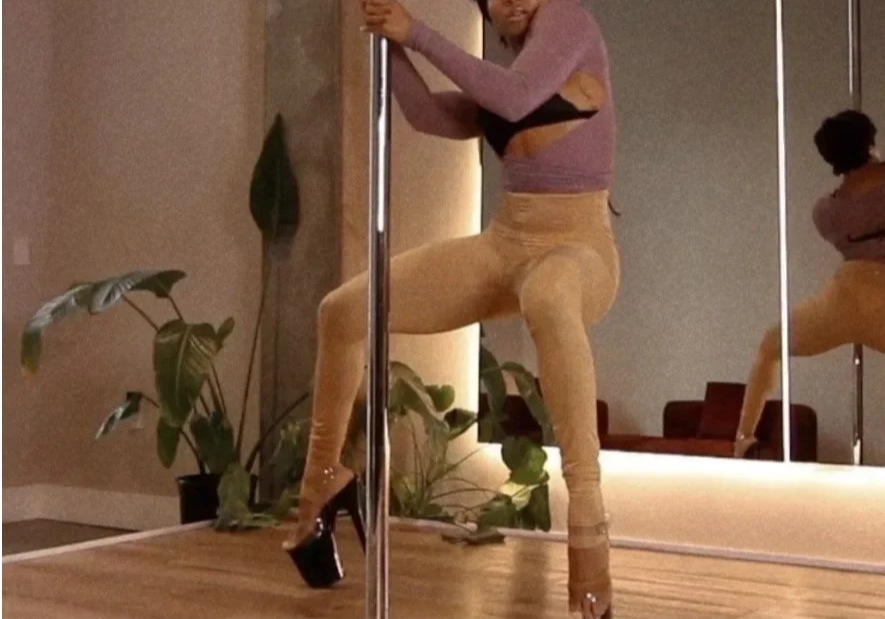
Where to Begin
If you are in Los Angeles and ready to start, Flow Foundations at PoleBait is your entry point. A 60 minute semi private session covering grip, breath, engagement, and foundational pole movement, with no prior experience required. If you are somewhere else, The Sensation Lab is where you begin. It is our digital studio, built so that distance is not the thing that keeps you from starting.

The best time to start was ten years ago. The second best time is now.
Frequently Asked Questions
Is pole dancing safe for beginners in their 30s?
Yes, with the right entry point. Pole has a reputation for being advanced because the images that circulate are advanced. The actual beginning is grip, breath, engagement, and learning to walk around the apparatus. Injuries in pole tend to come from skipping that foundation, not from age. A intimate session capped at 2-3 women means the instructor is watching your body rather than a room. That cap is the whole reason Flow Foundations is built the way it is.How does pole dancing compare to Pilates for women in their 30s?
They are not really competitors. They solve different problems. Pilates is excellent for core control, alignment, and precise small range strength. What it does not ask is for your upper body to move your full bodyweight through space against gravity, which is where the muscle mass and grip strength findings above come from. Plenty of women train both. If you already have a Pilates practice, pole tends to build on it rather than replace it.Do I need to be flexible or strong before starting pole?
No, and this is the most common reason women delay starting. Flexibility and strength are the outcome of the practice, not the entry requirement. The 20 week study cited above followed women with no prior pole experience at all and still found significant gains in muscle mass. You will be taught how to hold your own weight from the first session, at whatever level your body currently holds it. Flow Foundations assumes no experience.How often should I train pole to see results?
Once a week produces real change if it is consistent, and most women notice grip and upper body strength inside four to six weeks. Frequency is only half of it. What moves results here at PoleBait is that a session is two things at once. Functional strength built specifically for pole, meaning tricks, transitions, and inversions. But, it is also somatic work, meaning learning your own body's patterns and listening to what it tells you. The Ascent Residency is that work in private.Is pole dancing appropriate for women in their 40s and 50s?
Yes, and the case for it gets stronger with age rather than weaker. Load bearing work supports bone density. Continuous resistance preserves muscle. Grip strength, per the 2024 American Heart Association statement referenced above, tracks with longevity. What changes with age is pacing and recovery, not capacity. Capped sessions make it straightforward to work with the body actually in the room instead of a standard curriculum.What should I wear to my first pole class?
Shorts and a top you can move in. Skin is what grips the pole, so the backs of your knees and your inner thighs need to be bare for anything involving leg contact. Skip lotion or oil that day, it makes the pole slick. Bare feet or socks depending on the work. Heels are entirely optional and come much later if you want them.PoleBait Haus is a private pole and wellness studio in Downtown Los Angeles offering somatic pole training through the Fluid Body Method — a mind-body movement practice for women who want strength, joy, and a relationship with their bodies that lasts.