Pole dancing classes in Los Angeles: a working coach's guide
Author: Naya SOmanya
Last Updated: August 2026
This is for the person deciding where to take their first pole class, by someone who teaches in this city every week.
I teach pole privately in LA, and this is the honest version of what I tell women who ask me where to start.

Los Angeles has one of the most active pole communities in the country. Studios run from Culver City to DTLA to the Valley at every price point and philosophy, which means the hard part is not finding a class. It is finding the room that matches what you actually came for.

This guide covers what to look at before you book, where the studios are, and how to tell which environment will serve you.
What to look for before you book a pole class in LA
Before you sort by location or price, get clear on the kind of experience you want. LA pole studios are not interchangeable, and the differences matter more than most women realize before they walk in.Class size
Most commercial studios run drop-ins with eight to fifteen people. For a first experience, that can feel like a lot. Smaller settings, four to six people, give you more instructor attention and more room to make mistakes. If you are newer to pole, this is one of the most important variables.The studio's philosophy
Some studios are fitness-forward: high energy, choreo-heavy, results-focused. Others lean into artistry, sensuality, or community. A growing number approach pole as a somatic and wellness practice, closer in intent to Pilates or yoga. None of these is wrong. They produce very different experiences.Beginner infrastructure
A studio that runs mixed-level drop-ins is a different proposition from one with a dedicated beginner program. If you have never touched a pole, look for a true intro series rather than a general session you get folded into.Instructor credentials and methodology
The pole industry is largely unregulated, so instruction quality varies widely. Look for studios that are transparent about how they teach and what you will actually learn, not only about how the space looks.Pole Dancing Studios in Los Angeles by Area
Downtown Los Angeles (DTLA)
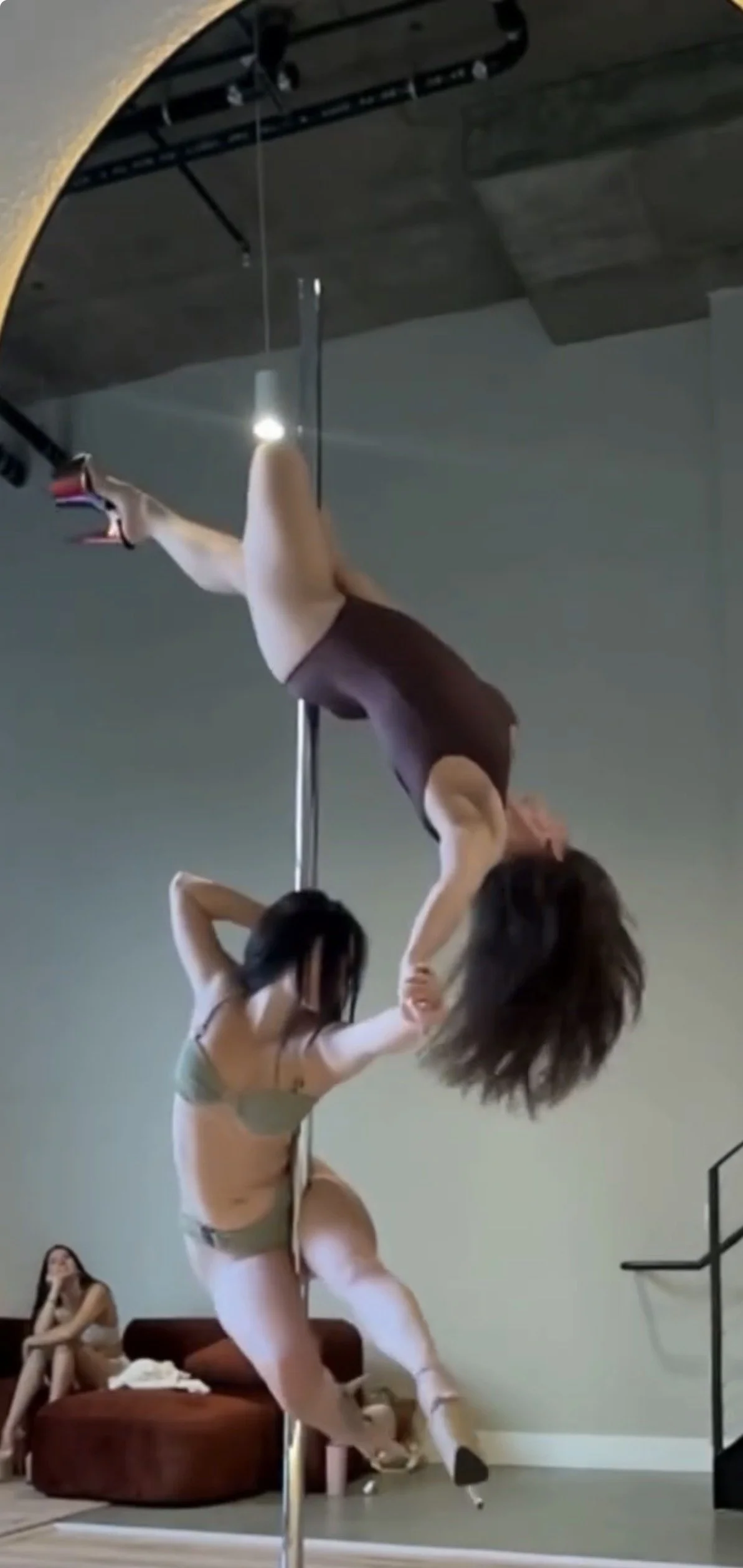
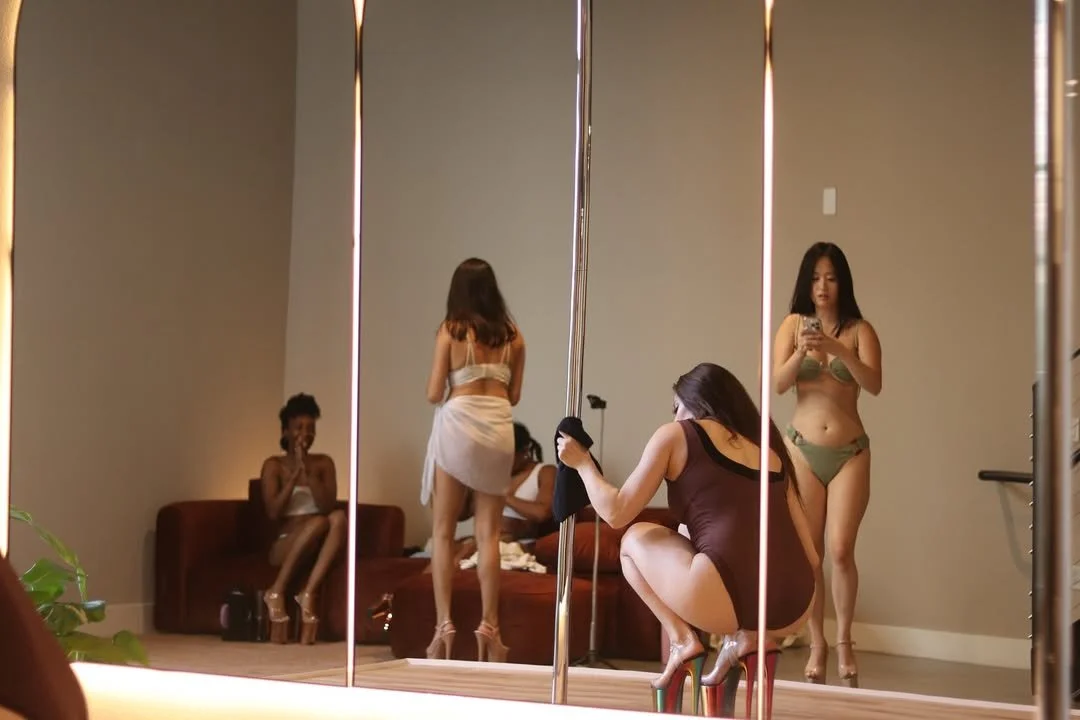
PoleBait is a private loft studio in DTLA, and it does not run as a drop-in studio. Full disclosure, this one is mine. The practice runs through structured programs rather than a class schedule: Flow Foundations as a progressive beginner curriculum, the Fluid Body Series as ongoing in-person work, the Sensation Lab as a digital studio available anywhere, and the Ascent Residency as application-based private coaching. The method underneath all of it is the Fluid Body Method, which trains breath, nervous system awareness, and sensation alongside technique. That puts it closer in category to embodied movement work than to fitness or club style pole. Sessions are small by design. More on this below.Studio Eden is a DTLA studio where classes are led by current and former strippers, and that lineage shows in what gets taught. The focus is real dance: low flow, spin work, floorwork, transitions that go somewhere. Drop-ins are easy to get into and first-timers are welcome without being handled. If you want to learn pole from inside the culture rather than approach it as a fitness class, this is the room. The space itself is beautiful, high ceilings and a lot of natural light.Culver City
Secret Pole Dance Studio n Jefferson Boulevard is the social, sensual end of the spectrum. Classes lean into sexy low flow, club-style choreography, twerk, and heels work, and the room is loud in a good way. Everyone gets their own pole. This is the fit for a woman who wants to build confidence in that specific expression, or who is arriving with friends and wants the night to be fun before it is technical.PŌL is a boutique studio with a genuinely beautiful space, airy, intimate, and thoughtfully designed. They describe their approach as a practice of love, and they offer beginner series alongside mixed-level drop-ins. One of the better options on the West Side for a first experience in a considered environment.Mid-City & West Adams
Evolve Sanctuary near Pico and Fairfax has been operating for over sixteen years and leans into the celebratory side of pole: party packages, bachelorette events, and group classes built around confidence and enjoyment. Good for a social, high-energy first experience.Spin City LA is a small studio in Adams-Normandie, on the top floor of a two-story building off West Adams. Classes cap at eight, and the studio also rents for open pole and self-practice, which is much of the point of the place. It is quiet and tucked away, built for women who want to develop their own relationship with the pole without a lot of noise around it. More haven than high-energy studio.The valley
Luscious Maven in North Hollywood is where you go if you want to get strong. The studio has a long record of producing competitive dancers, and the instruction reflects it: conditioning, technique, progressive skill work, and a culture that expects you to keep showing up. Founder Heather West is a national pole championship winner. If tricks, athleticism, and long-term skill development are the point for you, this is the strongest option in the Valley.How to Choose the Right Pole Class for Where You Are
Most of the frustration I hear about pole comes from a mismatch, not from a bad studio. A woman who wanted to learn to dance ends up in a conditioning class. A woman who wanted to get strong ends up in a room set up for a birthday party. So before you book, get honest about what you want pole to give you.

If you want to learn to actually dance, and to learn it from women who do this for a living, go to Studio Eden. If you want strength, technique, and a track that could lead to competing, go to Luscious Maven. If you want a quiet room where you can put on your own music and work, Spin City is the closest thing LA has to that.

If you want your first experience to be gentle and considered, in a space that has clearly been thought about, PŌL is the West Side answer. If you want it loud and social, Evolve Sanctuary and Secret are both built for that, with Secret leaning further into heels, low flow, and club choreography.

And if what you want is pole as a practice, with a defined method the deepens your mind body connection and a curriculum that builds real strength and skill, that is what I built PoleBait for.
Why Some Women Are Choosing PoleBait
The most common thing I hear from a woman before she comes to PoleBait is not a complaint about somewhere else. It is a description of a feeling she is looking for and has not found yet.

One woman who reached out recently put it simply: "I want to be free in my body. What you offer feels essential and safe. I'm drawn to the mobility, the movement, and the assurance in themselves that the women who train with you have. I desire it."

What she was responding to was the women she saw in PoleBait's content. Not performing tricks, not executing choreography on cue, but moving like themselves. Present. Powerful. Lost in it. With the technique to back it up.

Every studio in this guide can teach you pole, and several will teach you better than I will in the specific thing they are built for. Luscious Maven will make you stronger. Studio Eden will teach you to dance. What I built is a different category of thing.

PoleBait is not a studio offering classes. It is a structured practice with a method behind it. The Fluid Body Method trains breath, nervous system awareness, and sensation alongside technique, which means the work is as much about how you are in your body as what your body can do. In category terms it sits closer to Pilates or somatic embodiment work than to fitness pole or performance pole.

That is also why there are no drop-ins. Flow Foundations is a progressive curriculum you move through in sequence, not a series of unrelated sessions. The Fluid Body Series is ongoing in-person work for women who want to go further. The Sensation Lab is the digital studio, which means the method travels regardless of where you live. The Ascent Residency is private coaching by application, a coaching relationship rather than a class.

If that is the version of pole you have been looking for, this is where it starts.
Frequently Asked Questions About Pole Dancing Classes in Los Angeles
How much do pole dancing classes cost in Los Angeles?
Drop-in classes at most LA studios run from about $25 to $45 per session. Boutique and small-group formats sit higher. Series programs, memberships, and private coaching are priced by term rather than by session, so if you are comparing formats, compare cost per week rather than cost per class.Do I need to be strong or flexible to start pole dancing?
No. Most beginner pole classes, including Flow Foundations at PoleBait, are built for women with no prior pole experience and no assumed baseline of strength or flexibility. The practice builds both over time.What should I wear to a pole dancing class?
Skin contact with the pole is essential for grip, so shorts and a fitted top are standard. Most studios ask you not to apply lotion beforehand. Pole-specific shoes are optional for most beginner classes.Is pole dancing a good workout?
Yes. Pole builds upper body and grip strength, core stability, flexibility, and coordination at the same time, which is unusual for a single activity. Consistent training also tends to change how women feel in their bodies, though that part is harder to measure than strength is.What is the difference between a drop-in pole class and a series or membership?
A drop-in gives you one session with no commitment. A series or membership gives you progressive training, where each session builds on the last. If you want to develop skill and body awareness rather than try something once, an ongoing program will get you there faster.PoleBait is a movement and wellness practice based in a private loft in Downtown Los Angeles, built on the Fluid Body Method, a somatic approach to pole that trains breath, nervous system awareness, and sensation alongside technique. The practice runs in three tiers: Flow Foundations for women beginning, the Fluid Body Series for ongoing in-person work, and the Sensation Lab as the digital studio. Private coaching is available by application through the Ascent Residency.