Why Pole Dancing Is One of the Best Workouts for Women Going Through Menopause
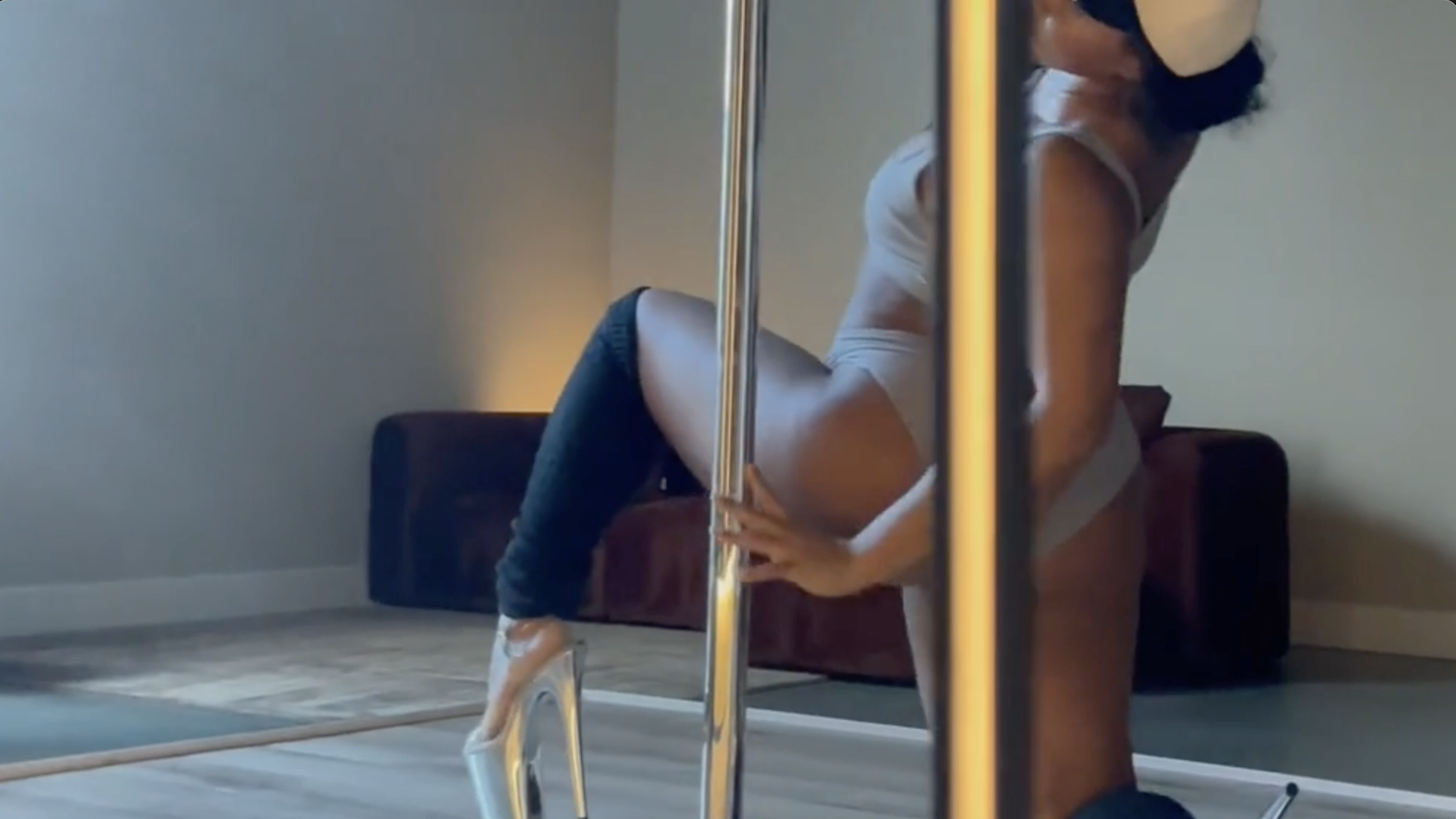
If you are in perimenopause or menopause and your body feels like it is working against you, you are not imagining it.The research is clear, and so is the experience of millions of women moving through this transition. The body changes. The rules change. The workouts that used to work often stop working the same way.What most women are not told is that the answer is not to keep pushing harder at the same routine. The answer is to find a practice that meets the real demands of this chapter. One that builds strength, mobility, balance, coordination, and body awareness in a way that supports what menopause can begin to take away.Pole dancing, when practiced intentionally and with a clear methodology behind it, is one of the most complete answers to that problem. It is also one of the least discussed practices in the menopause wellness conversation.This post is for the woman who knows her body, respects the science, and is looking for a movement practice that matches the intelligence she brings to her health.What Menopause Is Actually Doing to Your Body
You already know this, but it is worth naming clearly because it shapes everything that follows.

When estrogen declines during perimenopause and menopause, it does not only affect reproductive function. Estrogen plays an important role in muscle growth, repair, and maintenance in women. Research has shown that muscle stem cells, the satellite cells responsible for rebuilding skeletal muscle, rely on estrogen to function well. When estrogen drops, those cells begin to decline. The result can be faster muscle loss, lower muscle quality, decreased bone density, and a shift in body composition toward more fat mass and less lean tissue.

This is not a matter of effort or discipline. It is a physiological shift, and it requires a physiological response.

That response, according to a growing body of research, is resistance training. Not just light movement. Not only gentle stretching. Meaningful, progressive, load bearing strength work that gives the body the mechanical stimulus it needs to maintain and rebuild what estrogen is no longer signaling it to preserve.

The real question is what kind of resistance training actually serves a woman in this phase. Physically, psychologically, and sustainably.
Why Most Resistance Training Fails Women in Menopause
The research on resistance training for menopausal women is strong. The follow through is where things get complicated.

A Stanford clinical trial on strength training for menopausal women identified some of the most common barriers women report: not enough time, concerns about safety, uncertainty around what to do or how to do it correctly, gender based discouragement, and the challenge of balancing an already full life.

But one of the most important barriers is harder to measure. The practice has to feel worth returning to. Not for a few months, but for years.

A gym based resistance training program may check some of the physiological boxes. But for many women, it does not check the psychological ones. It does not always feel personal. It does not always create joy alongside the effort. It does not always offer the kind of novelty, discovery, and engagement that keeps a woman truly motivated, not just disciplined, through a life phase that is already asking a lot of her.

This is where pole is different, and that difference matters.
What Pole Specifically Offers Women in Menopause
Real progressive resistance training using your own bodyweight

Pole is recognized in research as an aerial discipline with elements of gymnastics and dance. Physiologically, that means every session asks your body to move its own weight through space against gravity while engaging the upper body, core, grip, and stabilizing muscles at the same time.

A 2024 longitudinal study followed women with no prior pole experience through a 20 week training program and found significant increases in muscle mass, fat free mass, and hand grip strength. These are the exact outcomes that matter for women navigating body composition changes during menopause.

For a woman whose estrogen is no longer providing the same muscle building signal, pole training offers the mechanical stimulus the body needs. Every session is resistance training. It just does not feel like the gym.
Grip strength (aka the longevity marker you're not training anywhere else)
Grip strength is one of the most well documented biomarkers of biological aging in women. A 2024 American Heart Association Scientific Statement found that each 5 kilogram increase in grip strength was associated with an 8 percent reduction in all cause mortality risk. Research on postmenopausal women also shows that muscular strength is inversely associated with mortality. In other words, the stronger you are, the better your body is equipped to support longevity and quality of life.Pole develops grip strength as a direct result of the practice. Not through isolated exercises, but through the repeated functional demand of holding, pulling, stabilizing, and maneuvering your bodyweight on a vertical apparatus.It builds the kind of grip that translates into everyday life and into decades of physical resilience.Postural stability and bone density support
Research published in PubMed found that regular pole dance practice produced significant improvements in postural stability, with those improvements increasing as training experience grew.For women in menopause, this matters. Declining estrogen can accelerate bone density loss and increase fall risk, which means postural stability is not about appearance. It is a real health concern.The weight bearing and multidirectional nature of pole training gives the body the kind of mechanical load that helps signal bone to maintain density. It does not replace medical care when medical care is needed. But as part of a comprehensive menopause health strategy, the bone and stability benefits of pole are meaningful and supported by research.Nervous system regulation and body awareness
Menopause is not only a physical transition. The hormonal shifts of this phase can affect mood, sleep, cognitive function, and the nervous system’s baseline state of regulation. Many women describe feeling less at home in their bodies. More reactive. More fatigued. More disconnected from the physical self they knew before.Somatic movement practices, which cultivate internal body awareness alongside physical activity, are increasingly recognized for their benefits to nervous system regulation, stress resilience, and body image in midlife women.Pole, when practiced with this intention, is a somatic practice. It asks you to slow down, feel what you are doing, and move with presence instead of simply chasing output.Women who train at PoleBait often describe leaving sessions feeling regulated, not just tired. Present. Grounded. More at home in the body they are in, rather than at war with the body they used to have.Joy — the most underrated factor in long-term adherence
This is the piece research keeps returning to, and the wellness industry still does not give enough weight to: intrinsic motivation is one of the strongest predictors of long term exercise adherence.Not discipline. Not guilt. The genuine desire to keep showing up because the practice gives you something that feels good.Pole does not plateau easily. There is always another skill to learn, another shape to explore, another layer of artistry, strength, and expression to discover. A feasibility study that followed women through eight weeks of pole classes found an 89.5 percent retention rate. Nearly nine out of ten women who started finished the program.For women being asked to adopt a new strength practice during an already demanding life transition, that matters.Women do not stay in pole because they force themselves to. They stay because they want to come back. Because something happens in a session that they cannot get anywhere else. Because the practice makes them feel capable, expressive, and free.And in menopause, feeling free in your body is not a luxury. It is medicine.What This Looks Like at PoleBait
At PoleBait, we train through the Fluid Body Method, a somatic pole training approach that brings together progressive strength and conditioning, pole technique, mobility work, nervous system regulation, and embodied artistry into one complete practice.Sessions are small, never more than five women, and guided with the kind of attention to detail that a larger class cannot offer. Every session begins by bringing the body online through intentional movement and breath, then ends with grounding. The pace is deliberate. The environment is warm, intimate, and designed to feel safe.This is not a space where you will feel behind. It is a space where you will be met exactly where you are and progressively built from there.For women navigating menopause, the Fluid Body Method offers something many fitness practices in this phase do not. It treats the whole person.The strength work is real. The somatic awareness is genuine. And the joy of discovering what your body can still do, and do beautifully, is something no reformer or free weight can replicate.Where to Begin
New to pole?
Flow Foundations is your entry point — a 60-minute small group beginner session covering grip, breath, engagement, and foundational pole movement. No prior experience required. In-person in Downtown LA from $45, online from $35.Ready for an ongoing practice?
The Fluid Body Series is our progressive small group training program — four 90-minute sessions per month, capped at five women, rooted in the Fluid Body Method. From $275/month.Want a fully personalized approach?
The Ascent Residency is our private 1:1 coaching program, built entirely around your goals, your body, and where you are right now. By application only. From $695/month.Your body is not working against you. It's asking for something different. This might be it.PoleBait Haus is a private pole and wellness studio in Downtown Los Angeles offering somatic pole training through the Fluid Body Method. We work with women at every stage of life who are ready to build strength, reconnect with their bodies, and find a practice that lasts.