Sign up to view this video
Join NowDynamic Travel Around the Pole: The Skate in Your Walk - Part 1
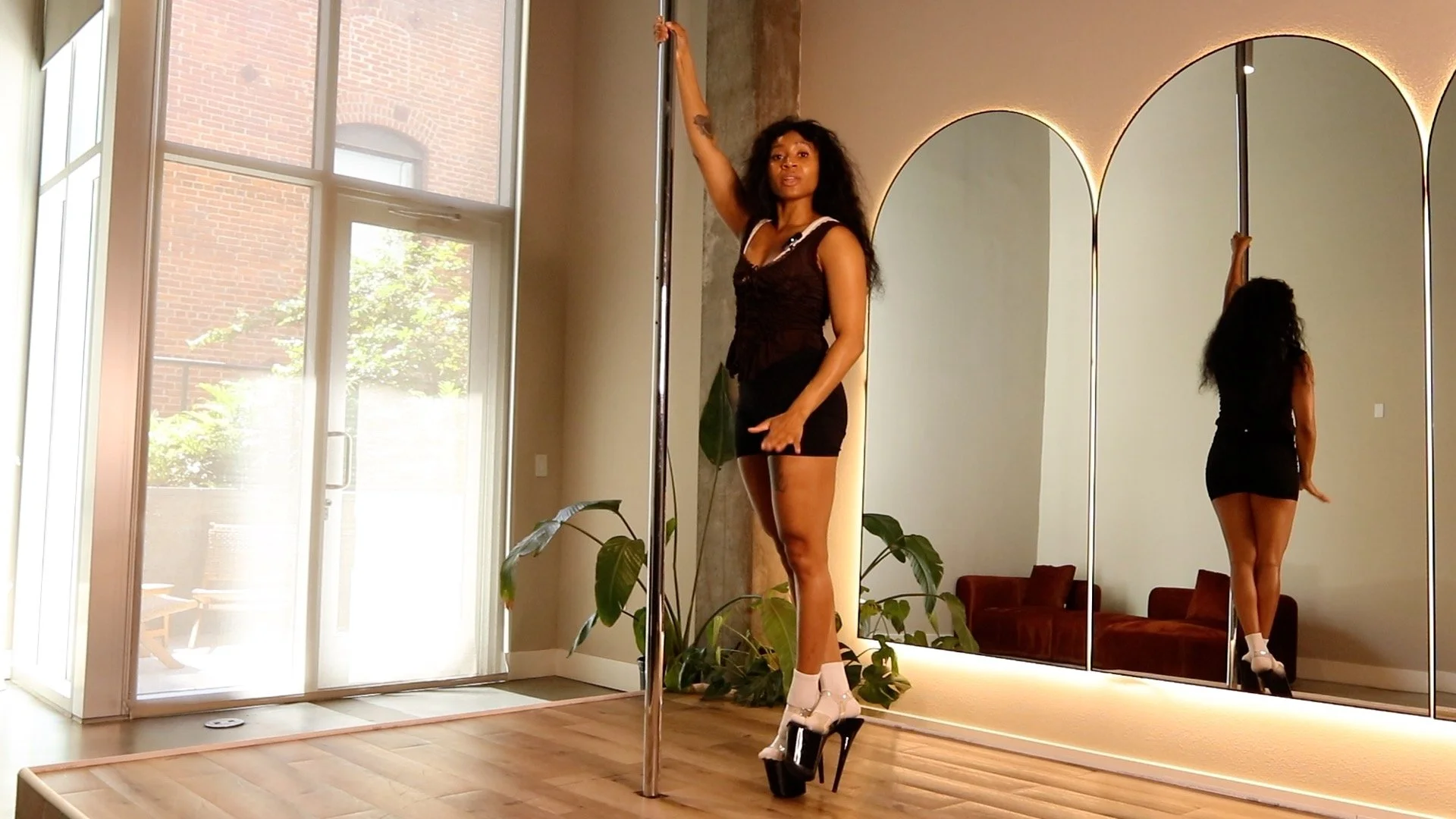
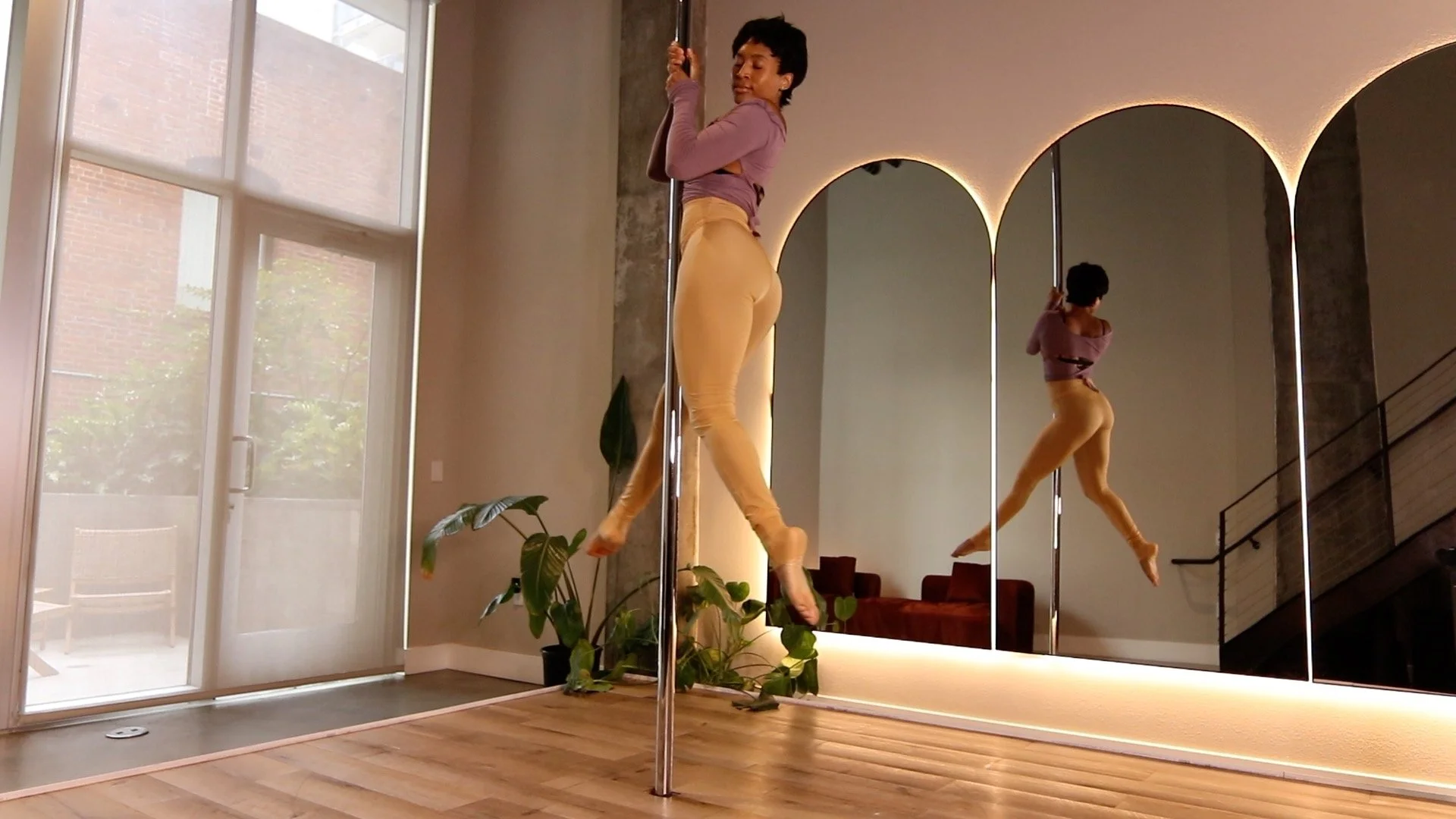
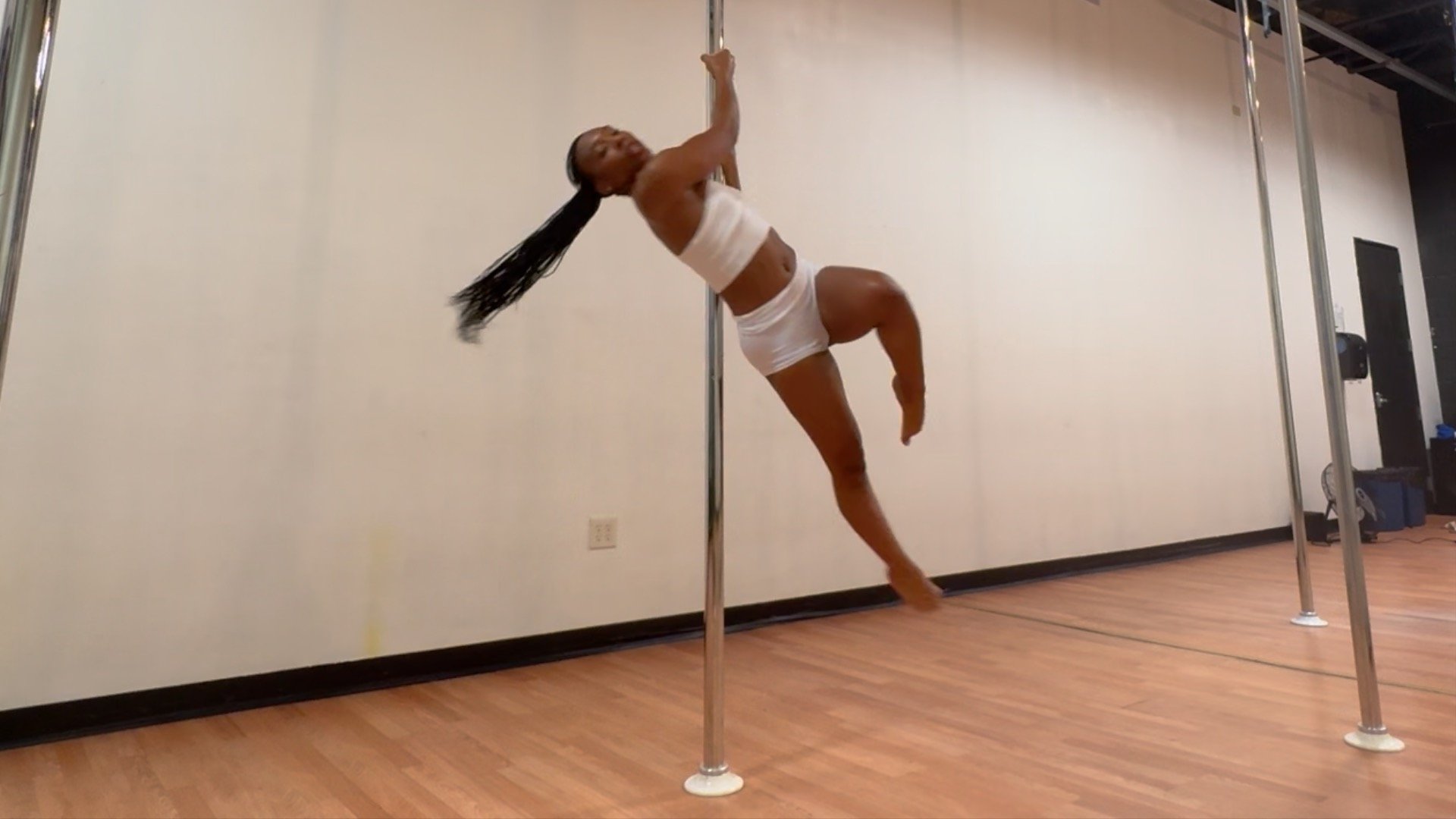
Most of us treat the walk around the pole as the thing between the real moves. This lesson is about making the travel itself worth watching. When you add skate and a little elevation to how you move around the pole, walking stops being transportation and becomes its own form of expression, with room for variety and spontaneity every time you circle.
In this first part, we build one travel sequence from the ground up:
The Walk: two steps and a skip, finding lightness in your feet
The Dip: a dip turn into a step behind
The Twizzle: changing direction with your weight instead of forcing it
The Edge: landing on the edge of the outside heel, then threading the inside leg all the way behind to change direction
The skate itself comes from how you hold the pole: hips leaning away, inside arm pulling down, lats knit together, shoulders down, heart forward. We use the lily pad concept to find your elevation.
This lesson also holds the full conditioning warm-up for all three parts of the series, shoulders, wrists, and ankles, so start here before moving on.
What’s next: In Part 2, we thread in reverse grabs and learn to trust your grip enough to release your weight toward the floor.
How to integrate this into your practice
Once you’ve drilled the sequence, get curious about the cadence of your steps. Add a count, and add something new on a step you choose. Notice the exact moment you feel like you’re skating, light on your feet, and follow that thread wherever it wants to go. Pay attention to where your weight lands so the flow stays continuous, then add a quality to the travel that’s yours. That’s where the mechanics turn back into dancing.
Ready to take it further? Open the Fluid Body Prompt Book, pull a prompt, and bring new expression to how you travel. Take one step of the sequence and see how many ways you can cross the same distance.