Sign up to view this video
Join Now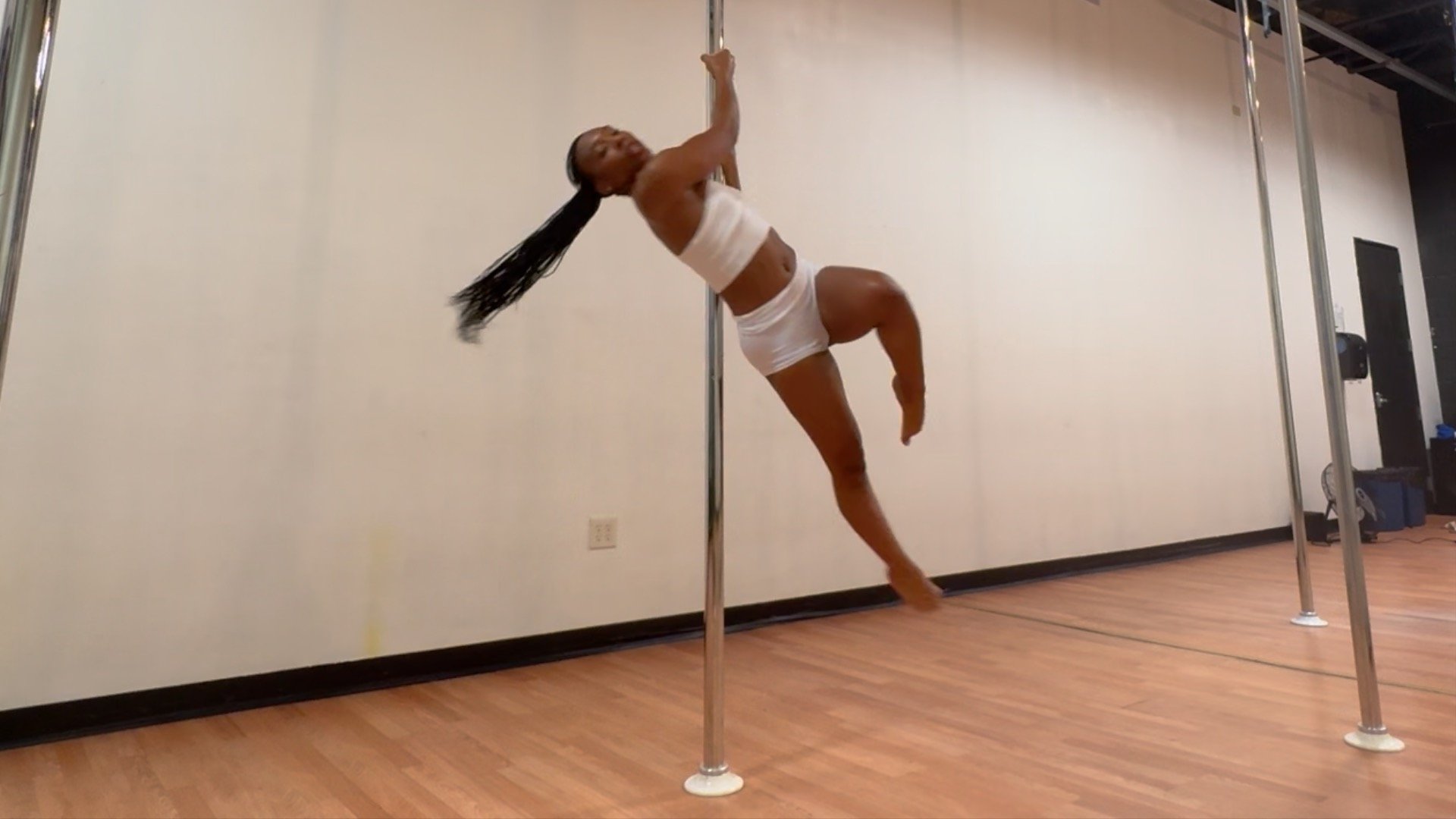
The Twizzle: Invert Entry on Spin
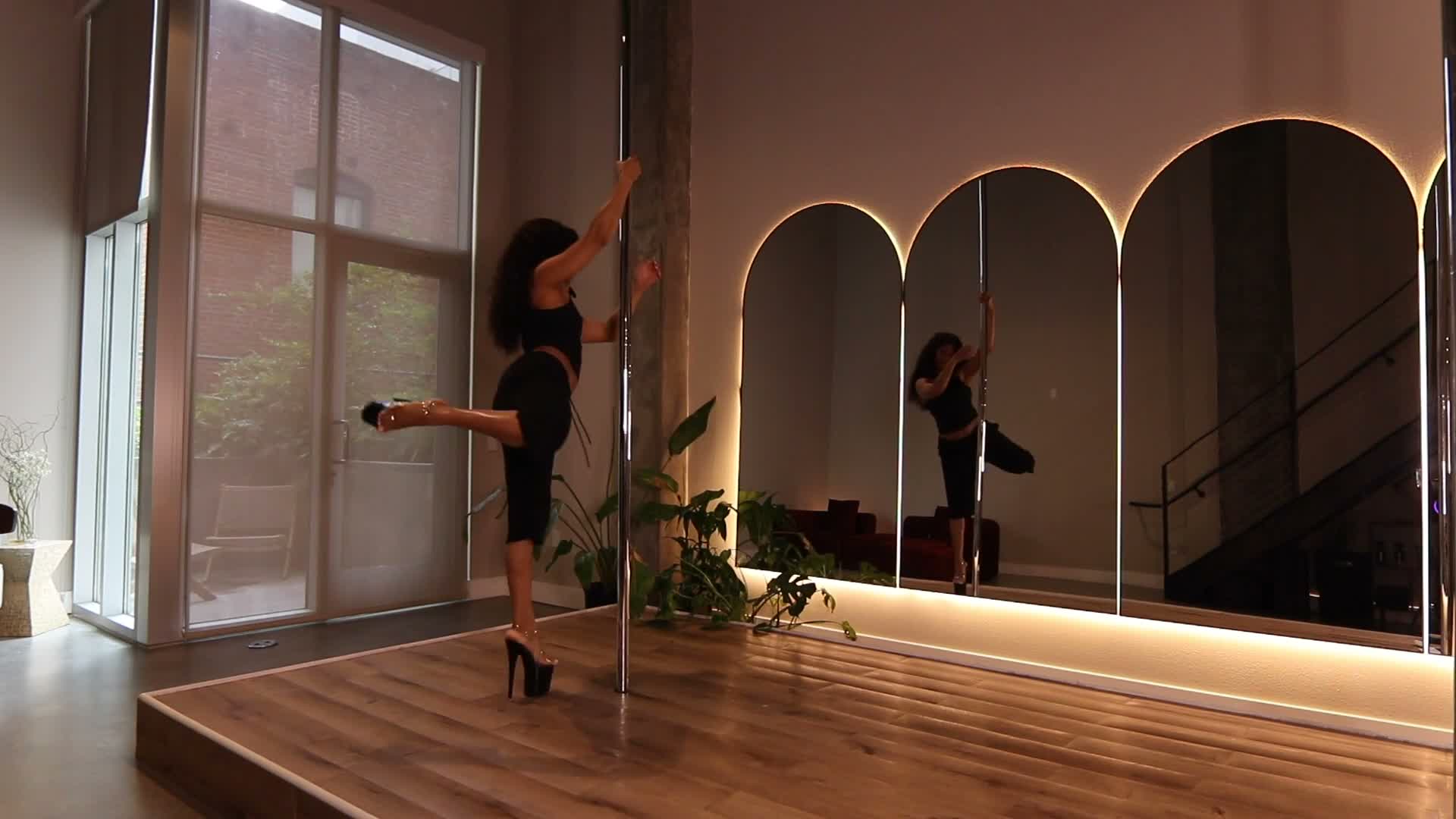
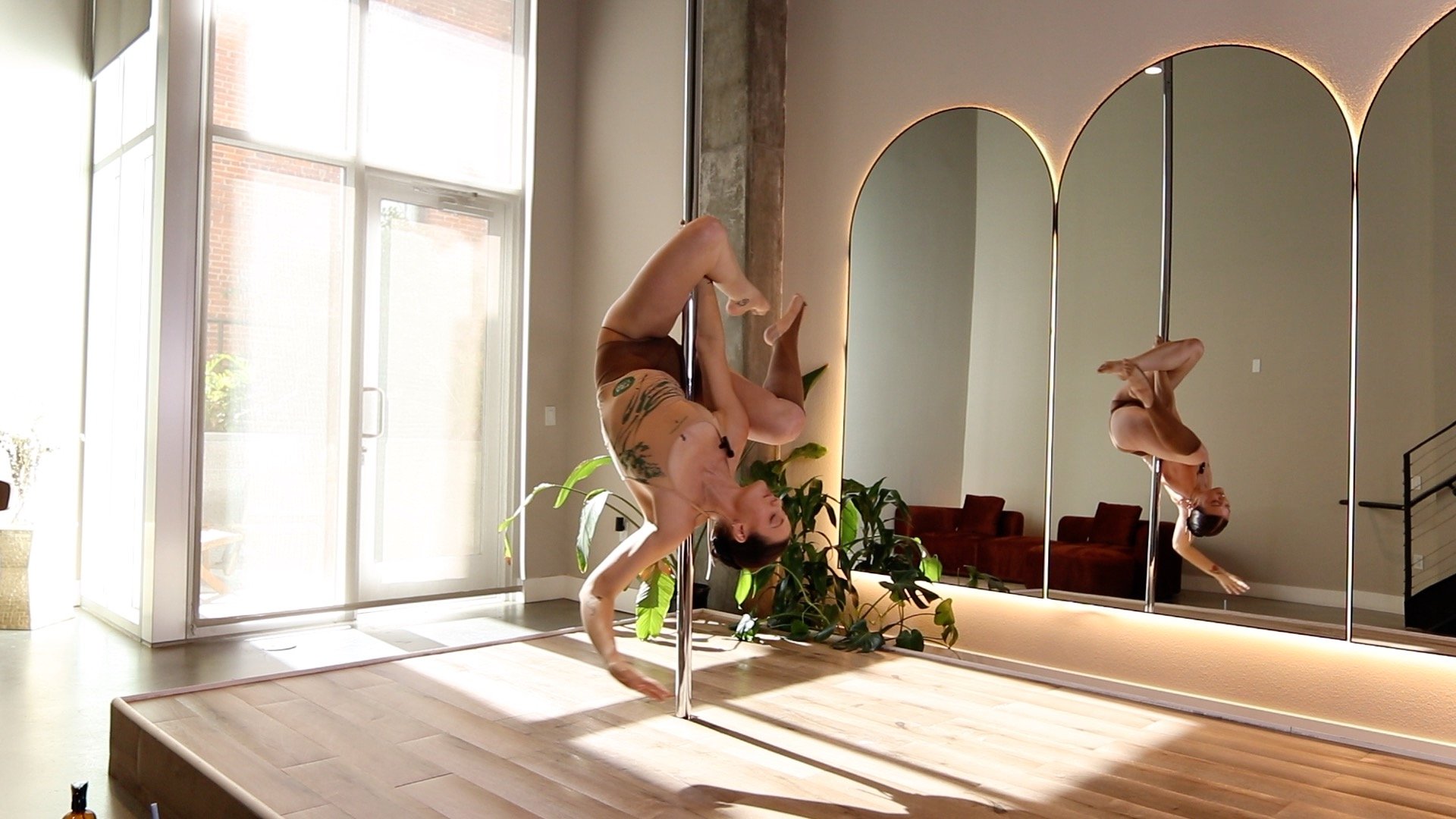
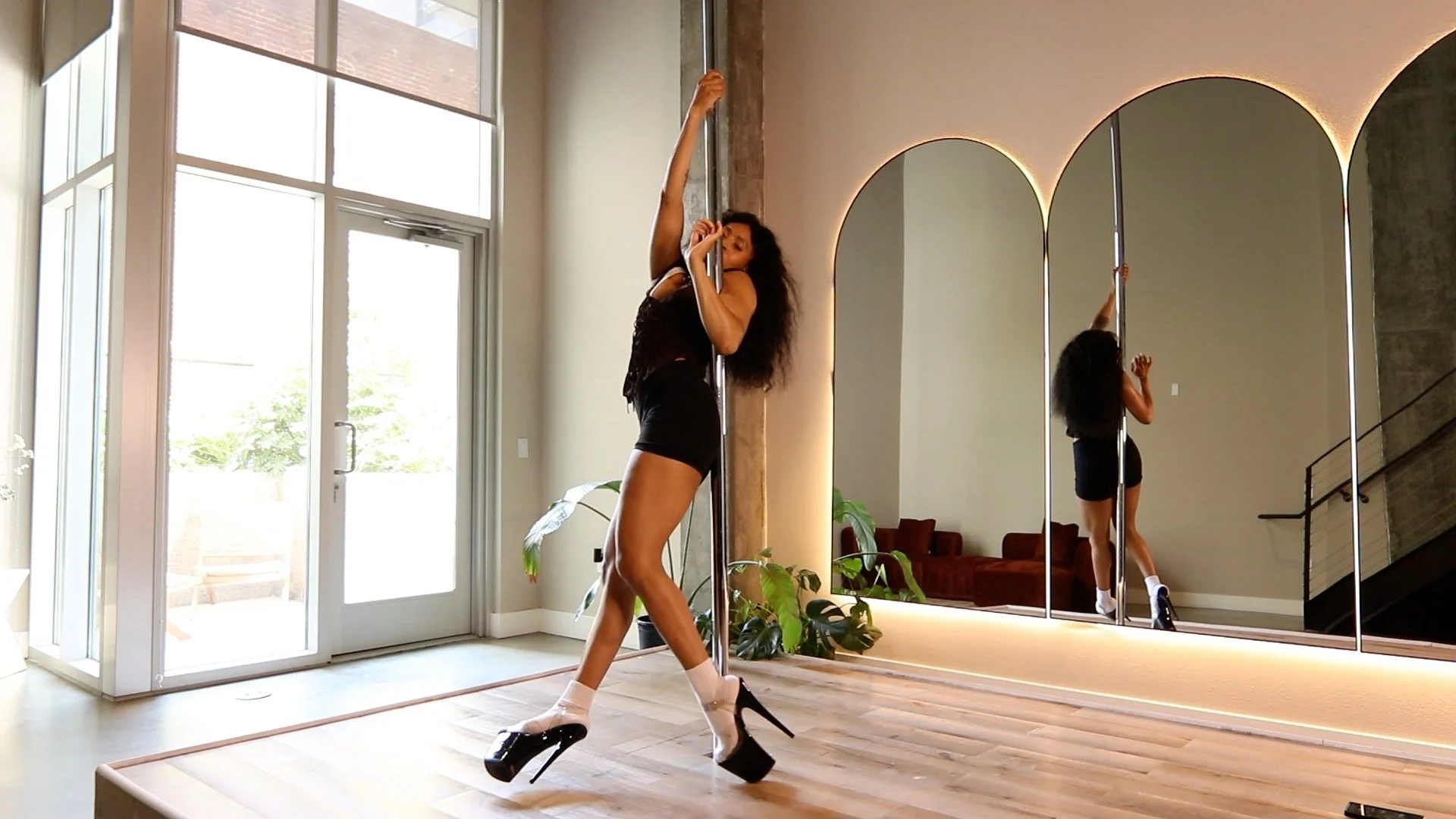
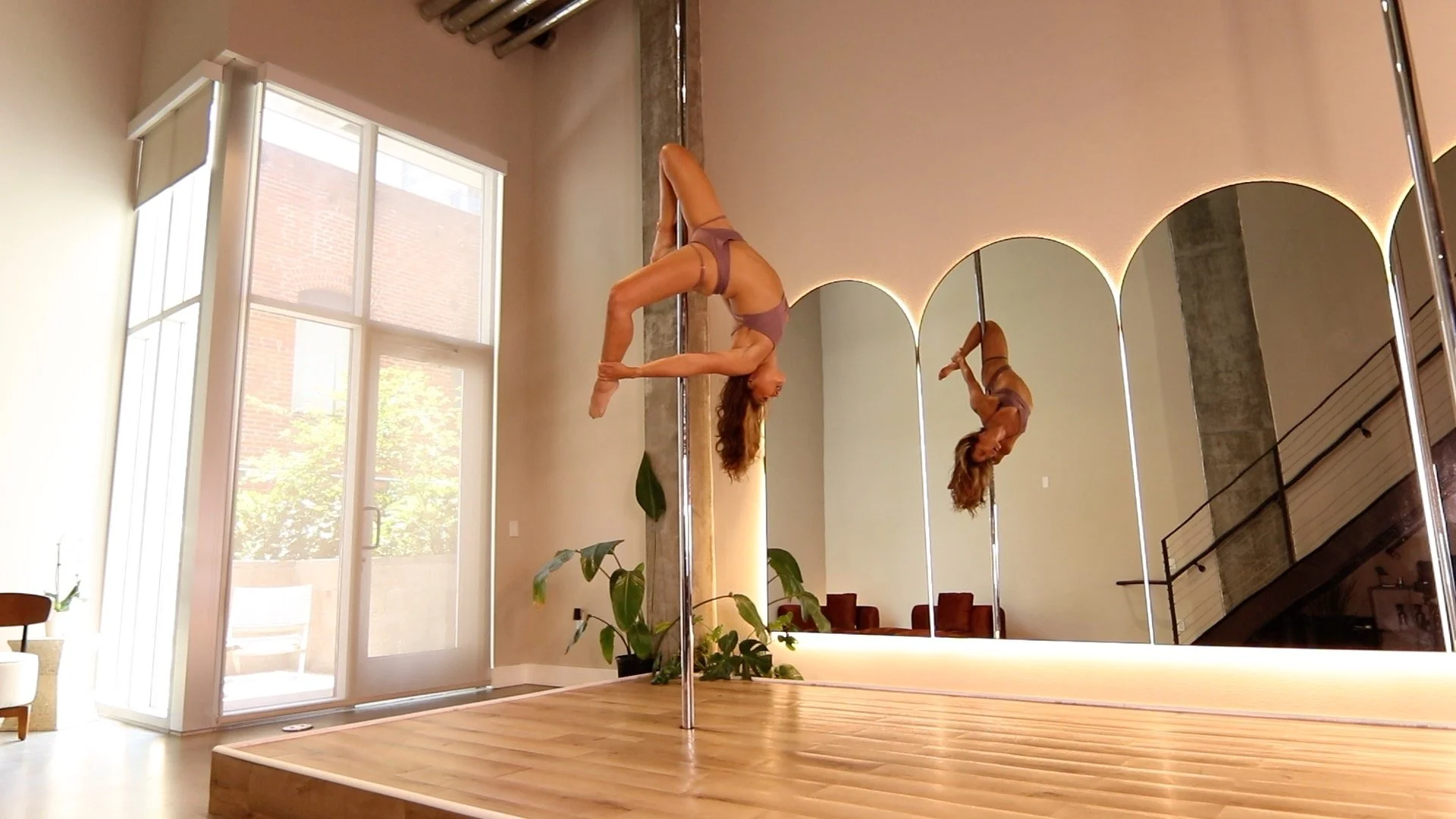
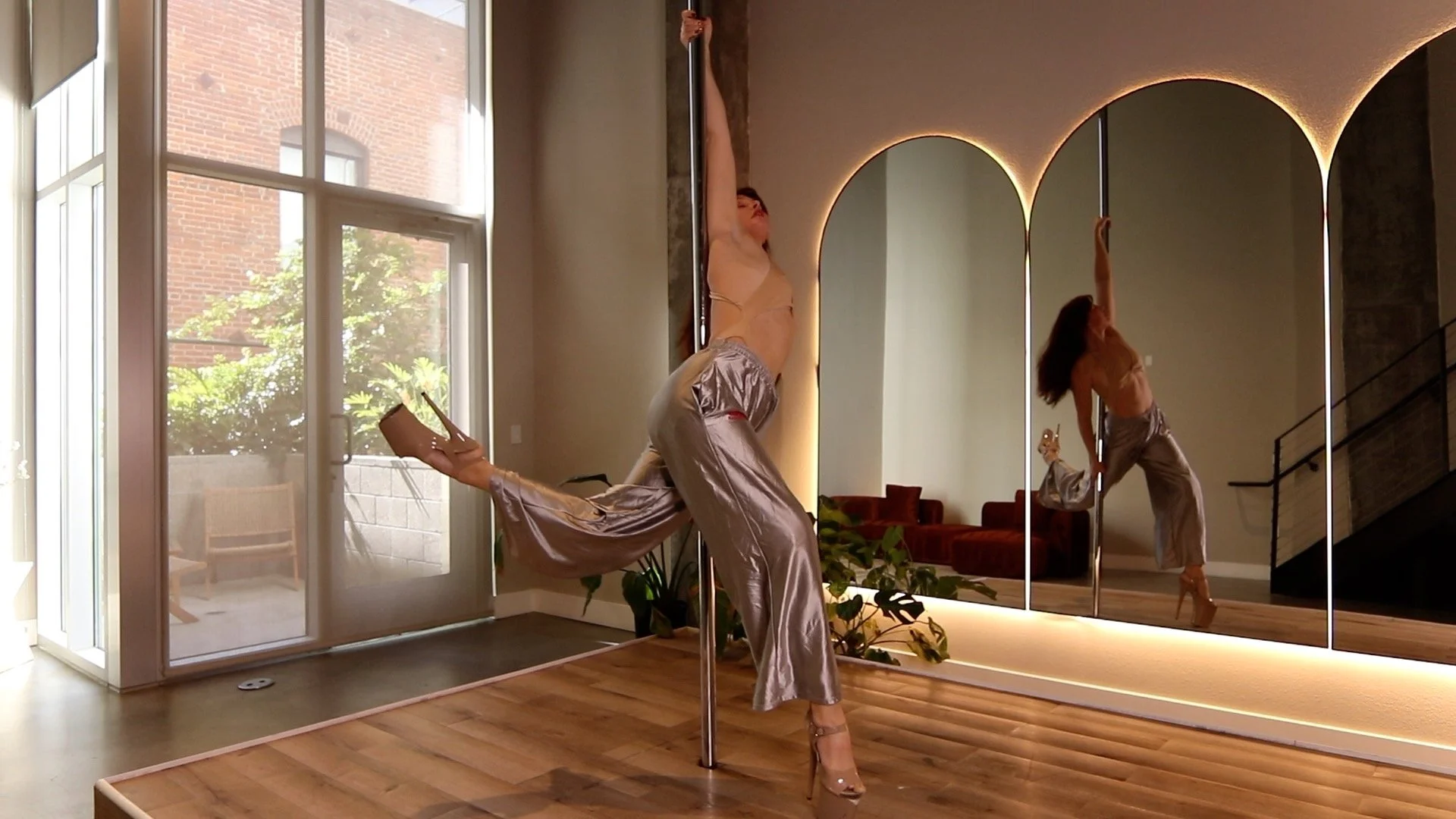
In this lesson, Dopamine breaks down her signature twizzle invert entry on spin, the entry that feels less like forcing an invert and more like stepping in and surrendering to the spiral. The whole move runs on momentum: you use the spin direction to propel you, and every part of your motion is informed by that force rather than fighting it.
Dopamine takes the entry apart piece by piece. You'll start by initiating the spin with push-pull engagement, then work the invert on its own, pulling into the pole toward the armpit. From there, she shows how the outside leg bends at the knee and pushes off as you settle into the armpit, timing the whole thing so the spin carries you rather than stalling you. Timing is everything here. Get it right and it flows; get it off and you lose the effect, like mistiming the jump-in on double dutch.
The Sensation Layer is where the entry reveals what it's really about. After you pull yourself into the pole and the centripetal force takes command, you'll feel your body shift from fighting against the spin to moving with it. That's the double-dutch effect, the moment the spiral takes over the work of holding you up. When you stop bracing and let the momentum carry you, the entry stops feeling like effort and starts feeling like weightlessness.
How to integrate this into your practice
Play with the timing before you chase the full entry. Find the exact moment right before the spiral takes over, that's where the twizzle lives, and let the momentum do the work instead of muscling through it. Then experiment: see where the spin takes you if you don't invert after you're pulled in. The twizzle entry is only one way to play with weightlessness on spin, so use it as a doorway, not a destination.
Ready to explore further? Open the Fluid Body Prompt Book, pull a prompt, and bring new expression to your entries and exits. Take the moment of weightlessness and see how many ways you can travel out of it.
Prerequisite: a confident invert on spin. This entry builds directly on that foundation, so make sure your invert feels solid before you add the momentum.